How Royal Caribbean turns cruise ships around in hours, explained
In:Every week, Royal Caribbean cruise ships begin the process of finishing one sailing, while preparing for the next in a matter of hours.

The process of turnaround day is a logistical challenge that involves just about every crew member on the ship to prepare for the next voyage.
Royal Caribbean has fine tuned this process down to a science, and usually has the ship ready to set sail in less than 8 hours.
Passengers are blissfully unaware of how much turnover is occurring, as work begins in the early morning hours and then right up until it's time to set sail.
Here's what happens in-between cruises and the major steps involved to get a cruise ship turned over.
Cruise ships return to port in the early morning hours
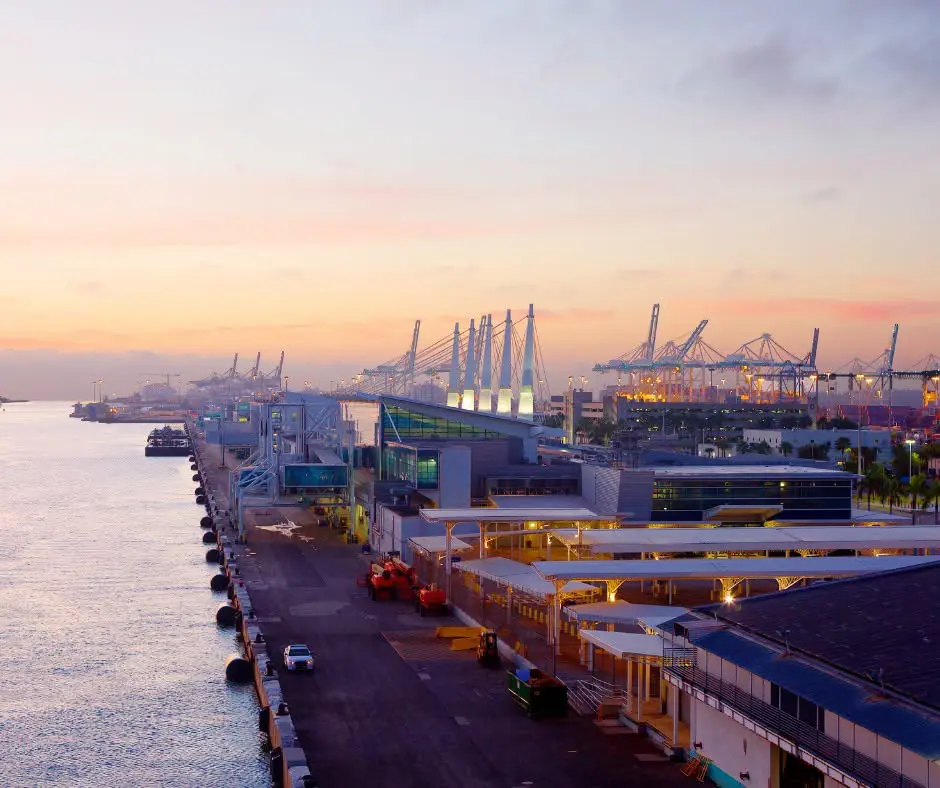
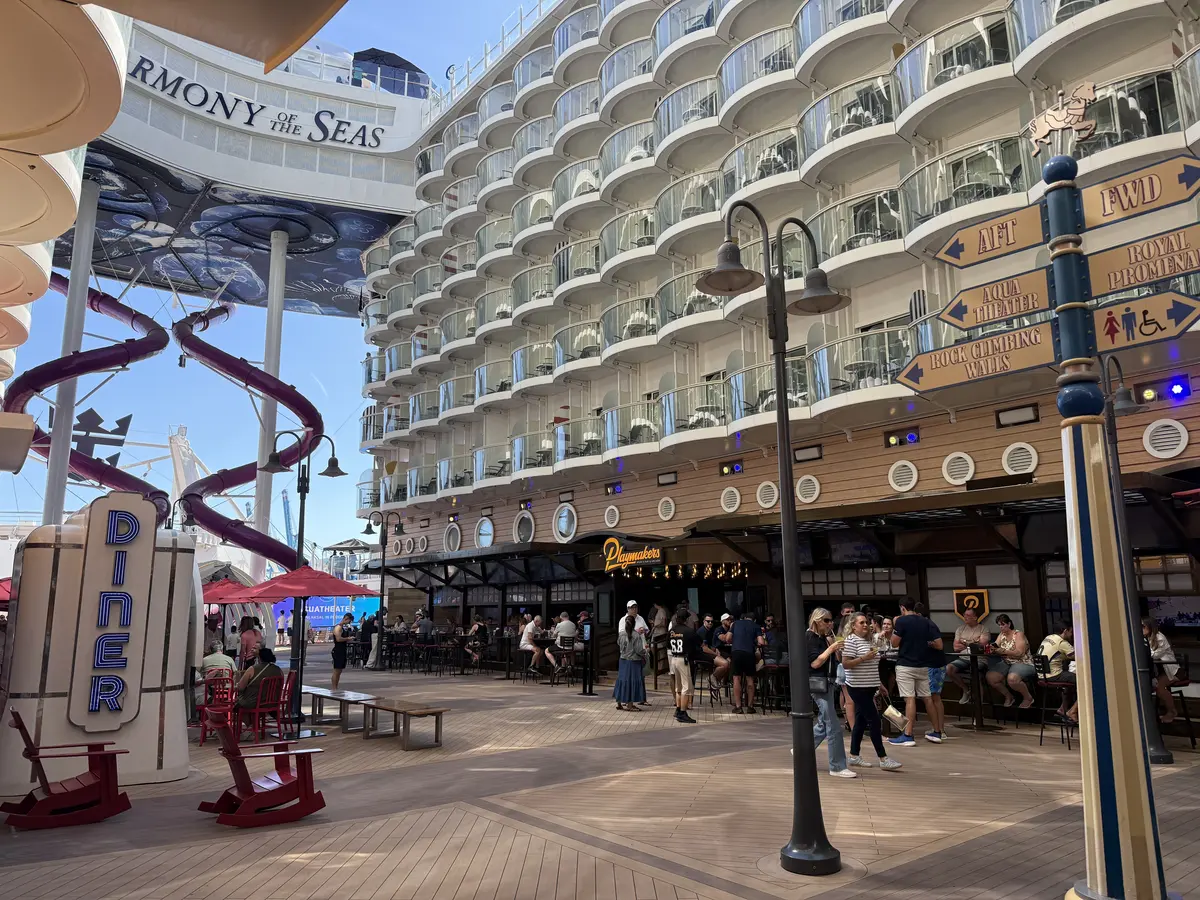
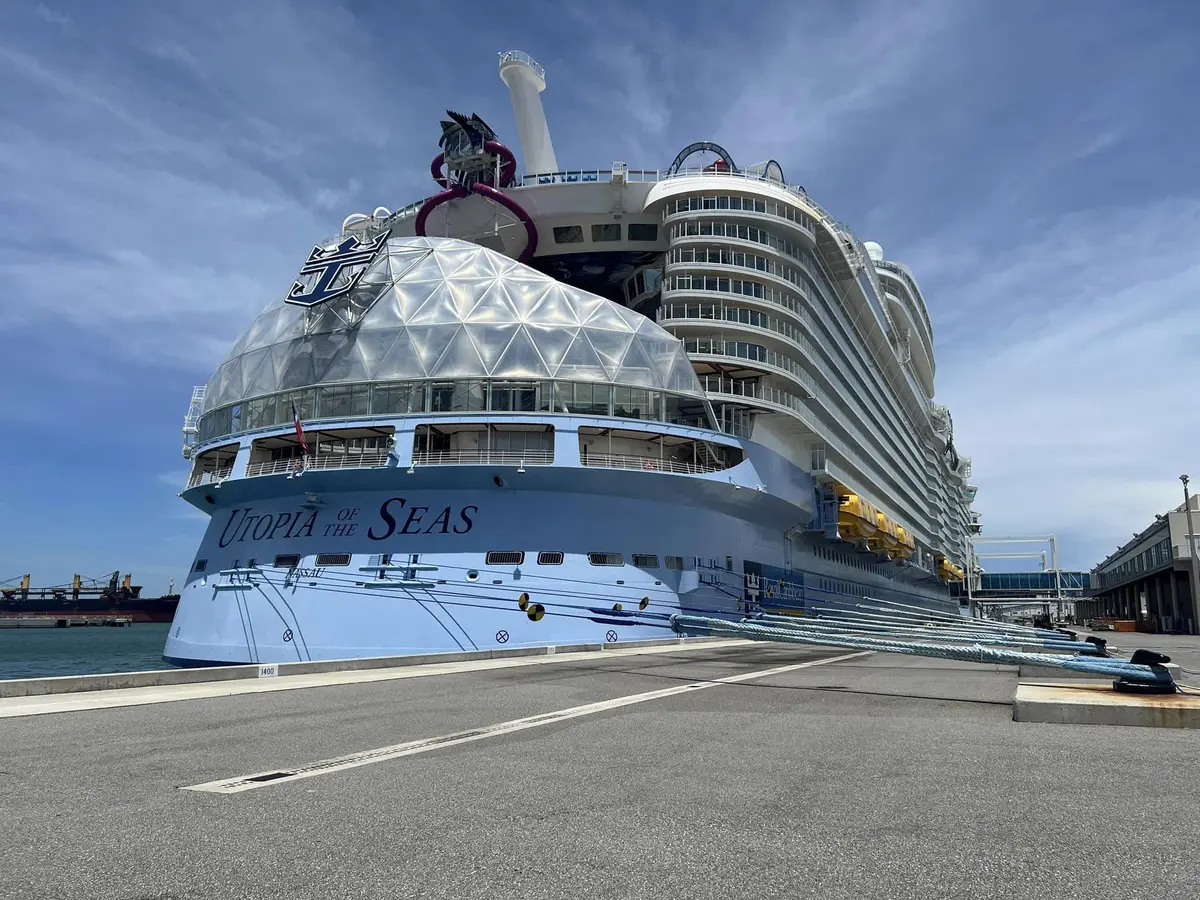
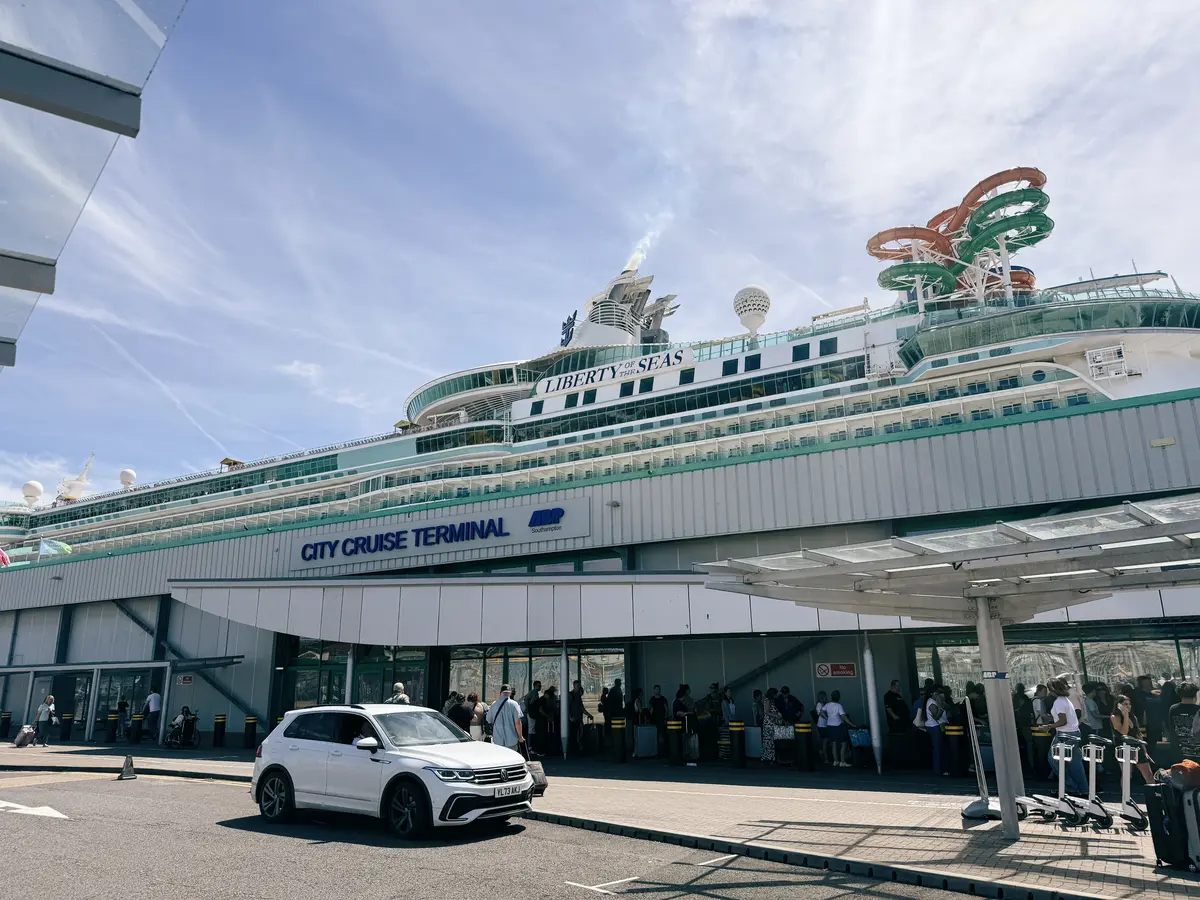
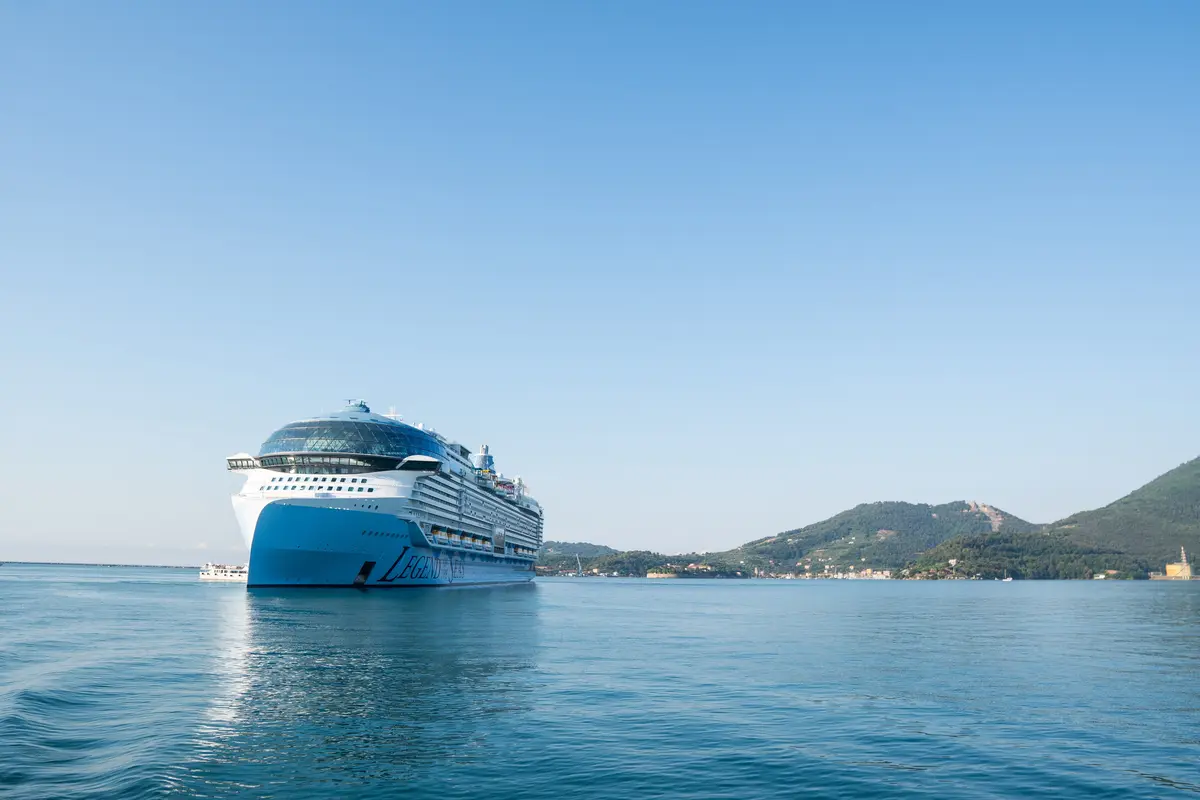
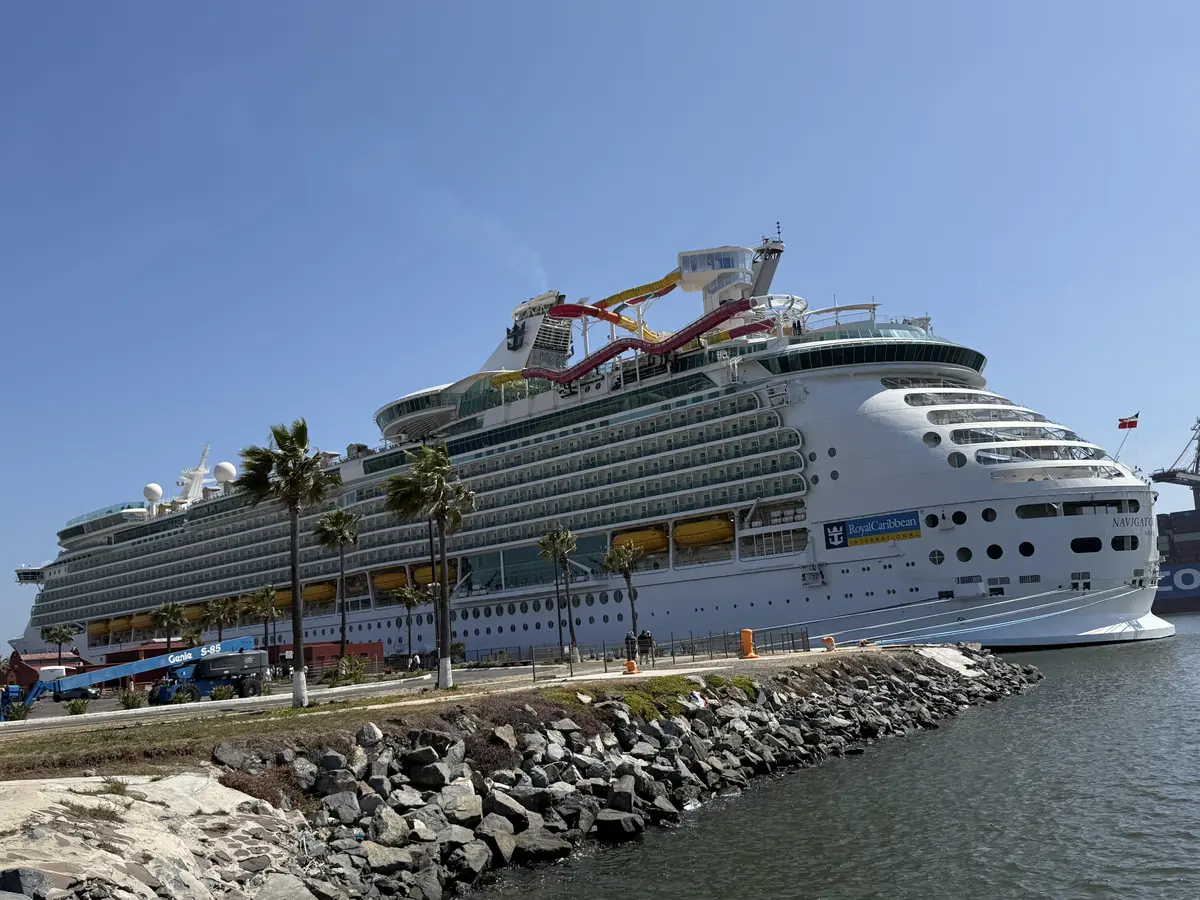
Royal Caribbean cruise ships will sail back into their homeport before most passengers wake up.
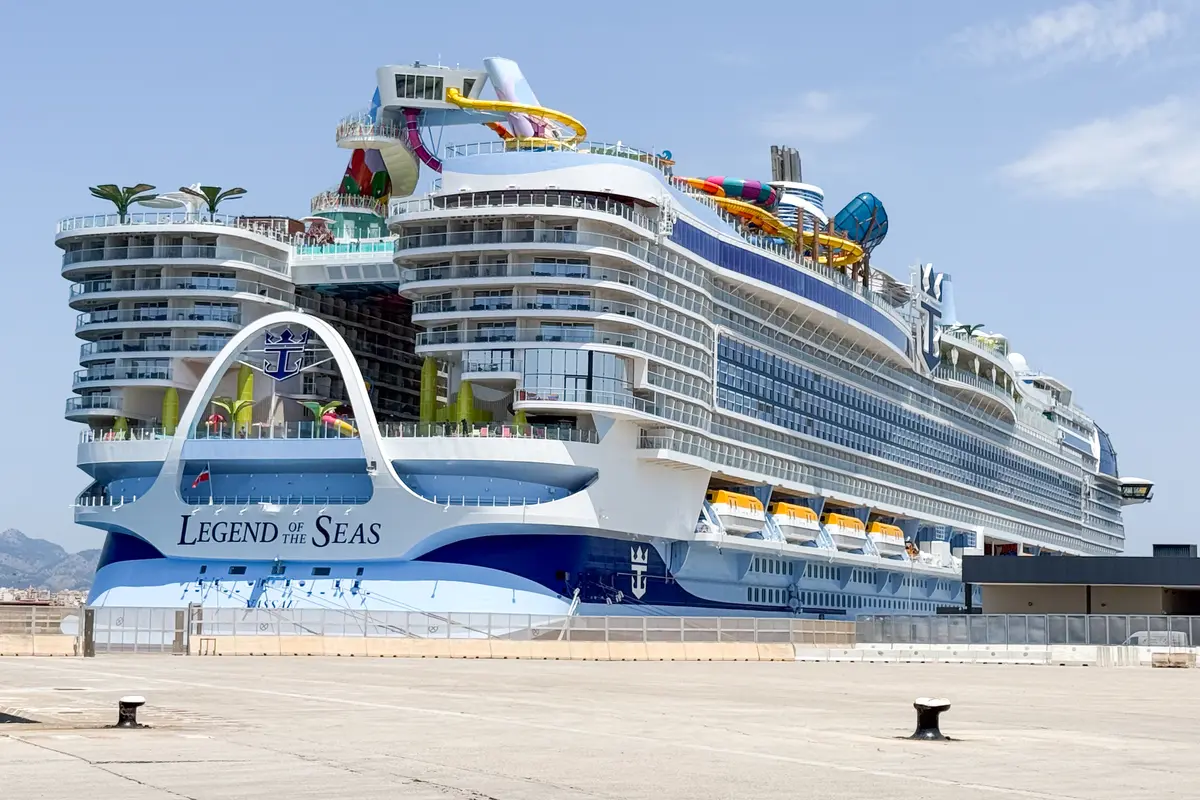
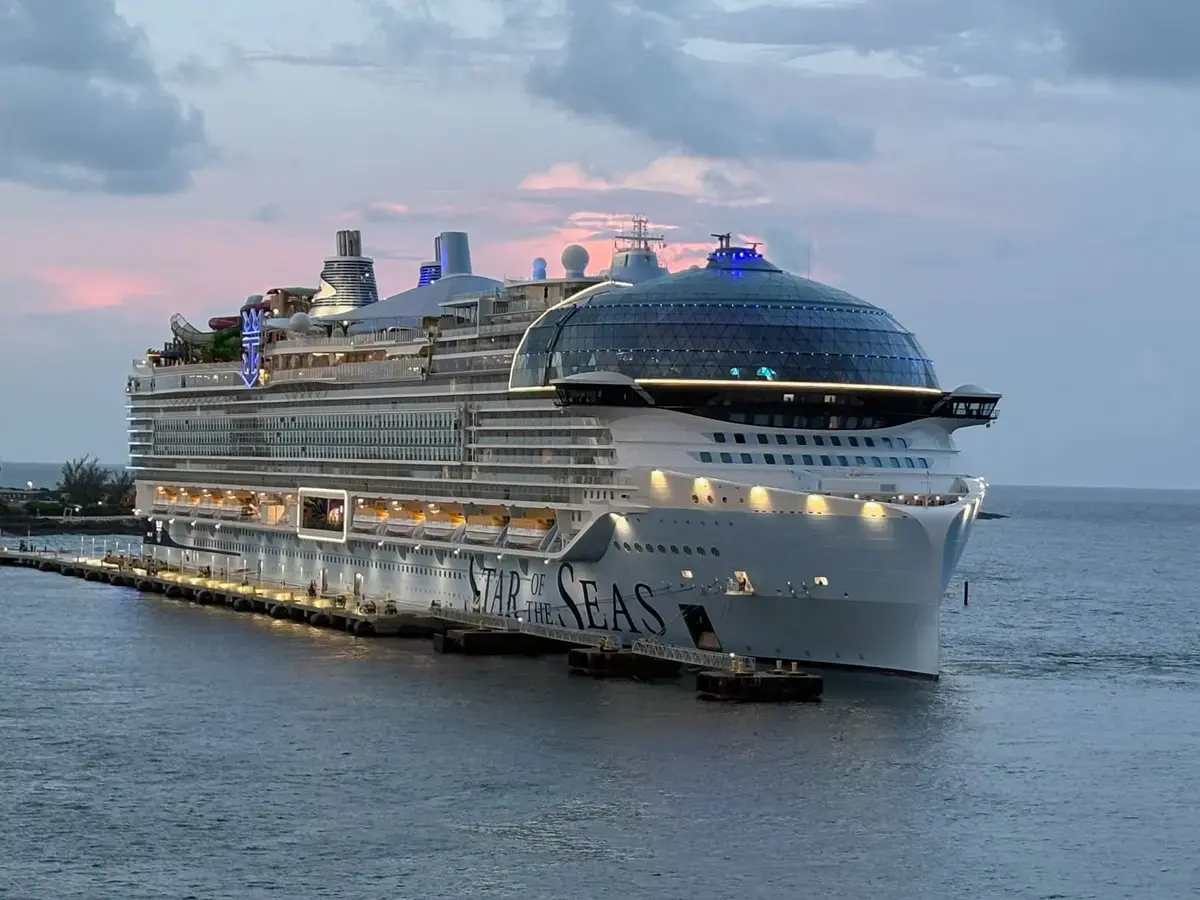
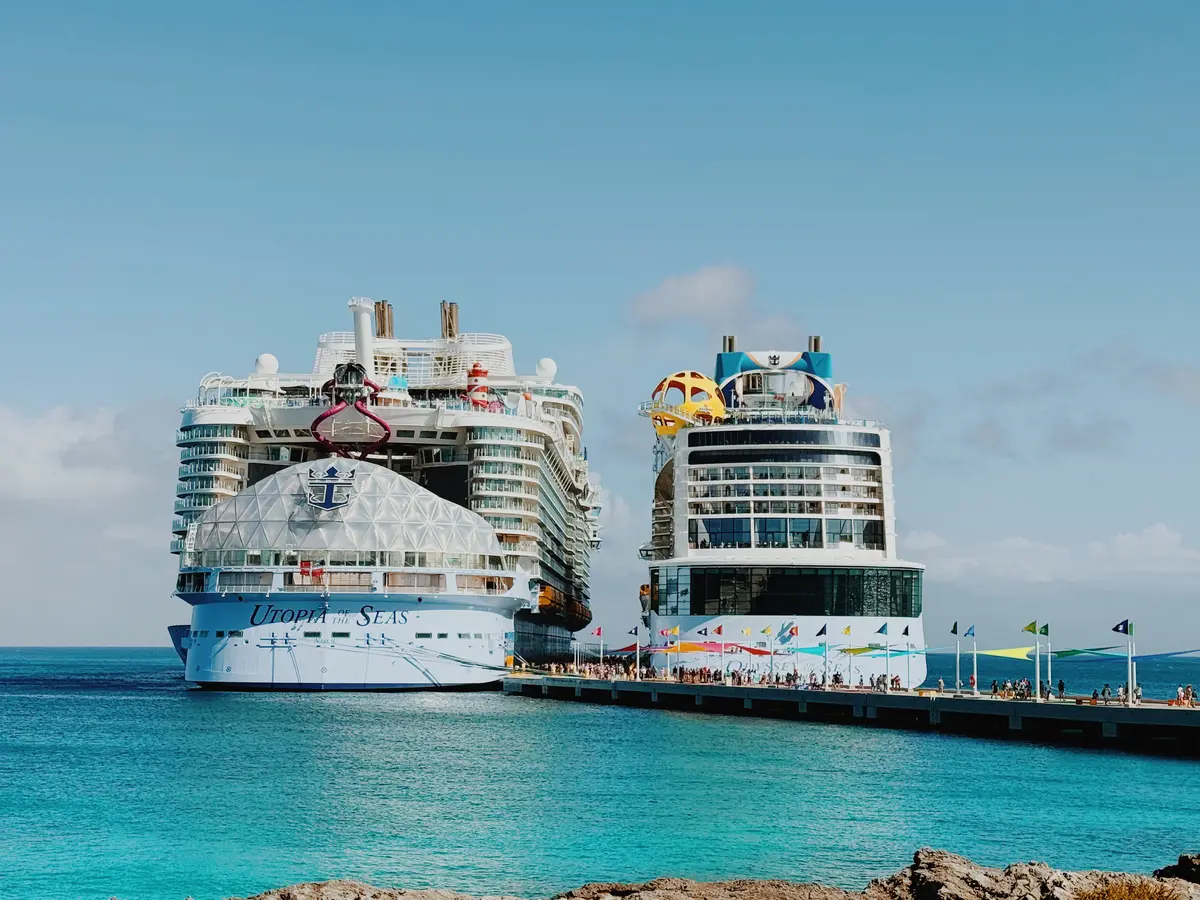
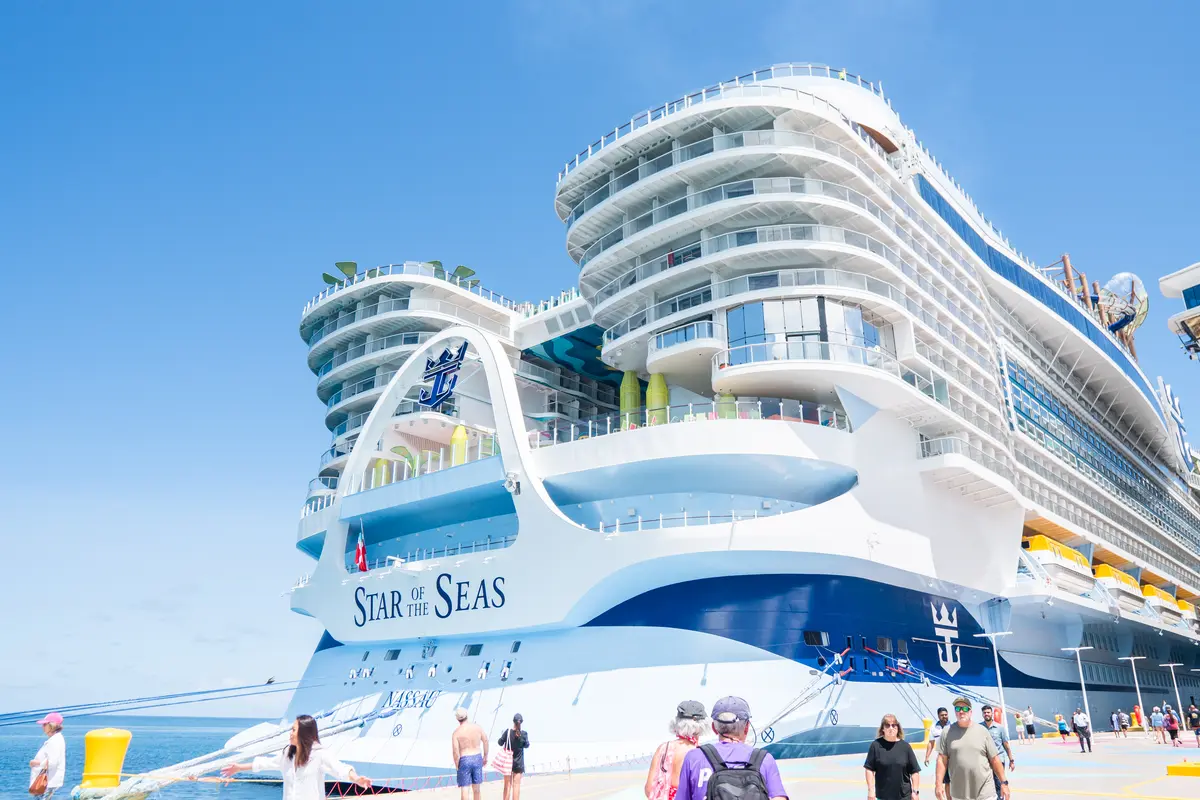
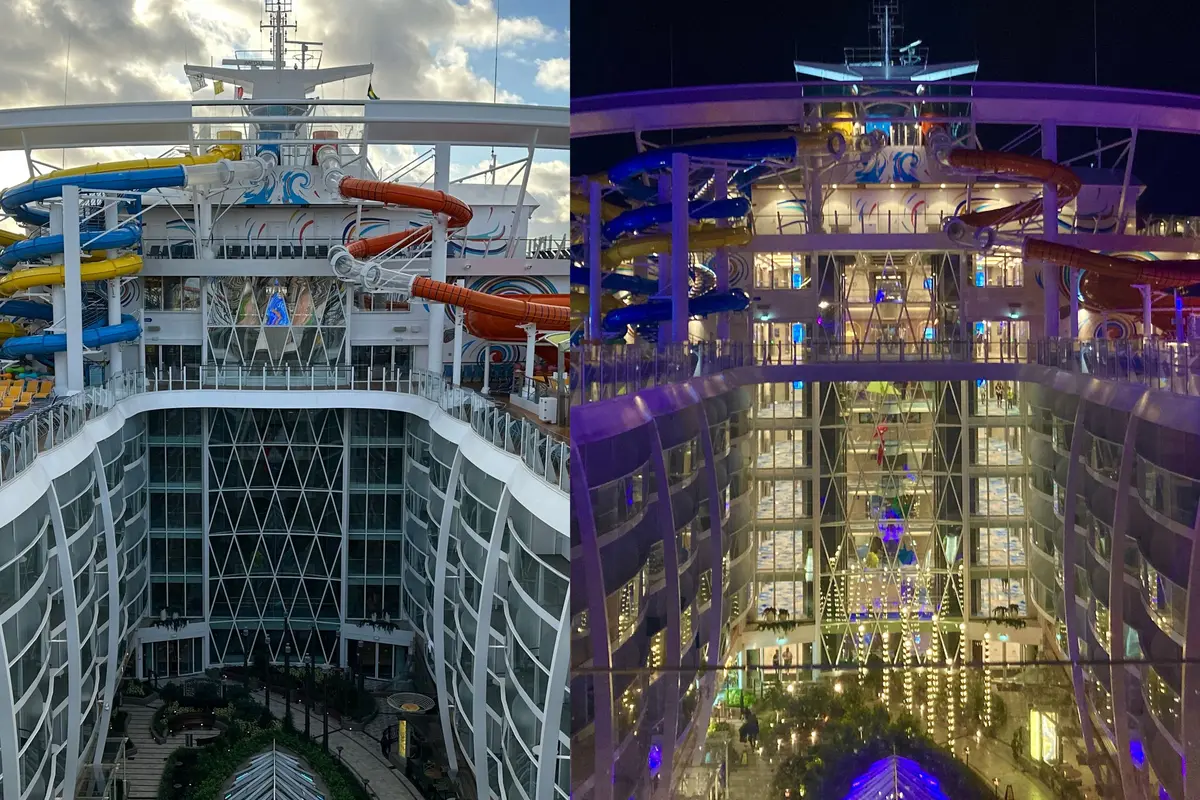
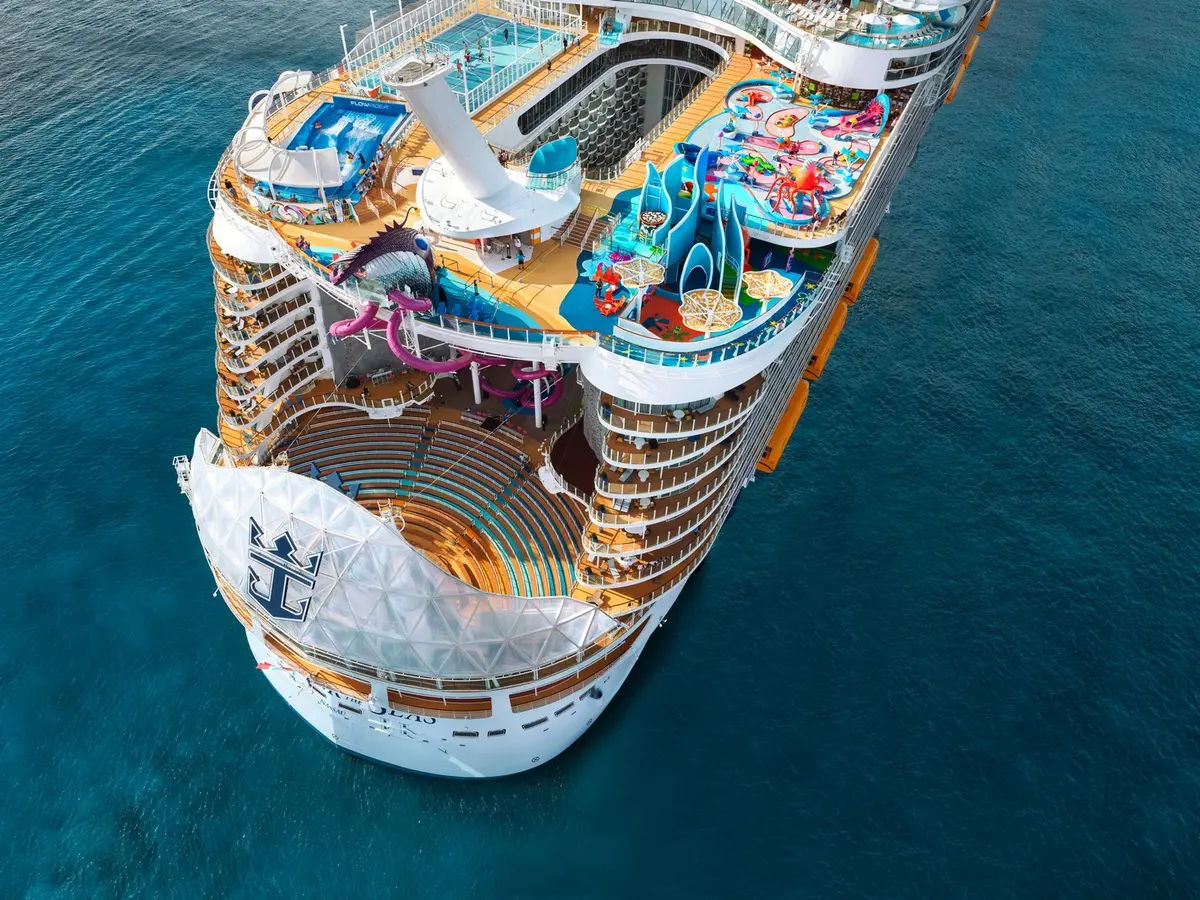
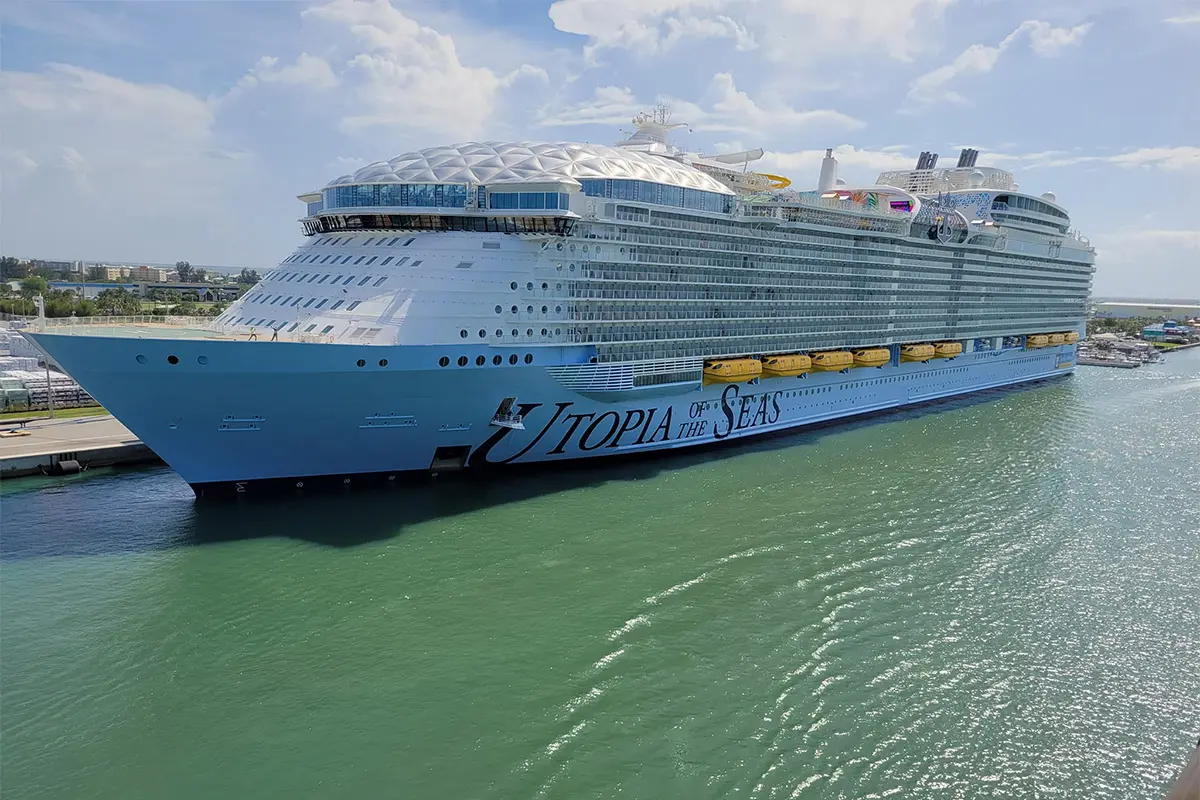
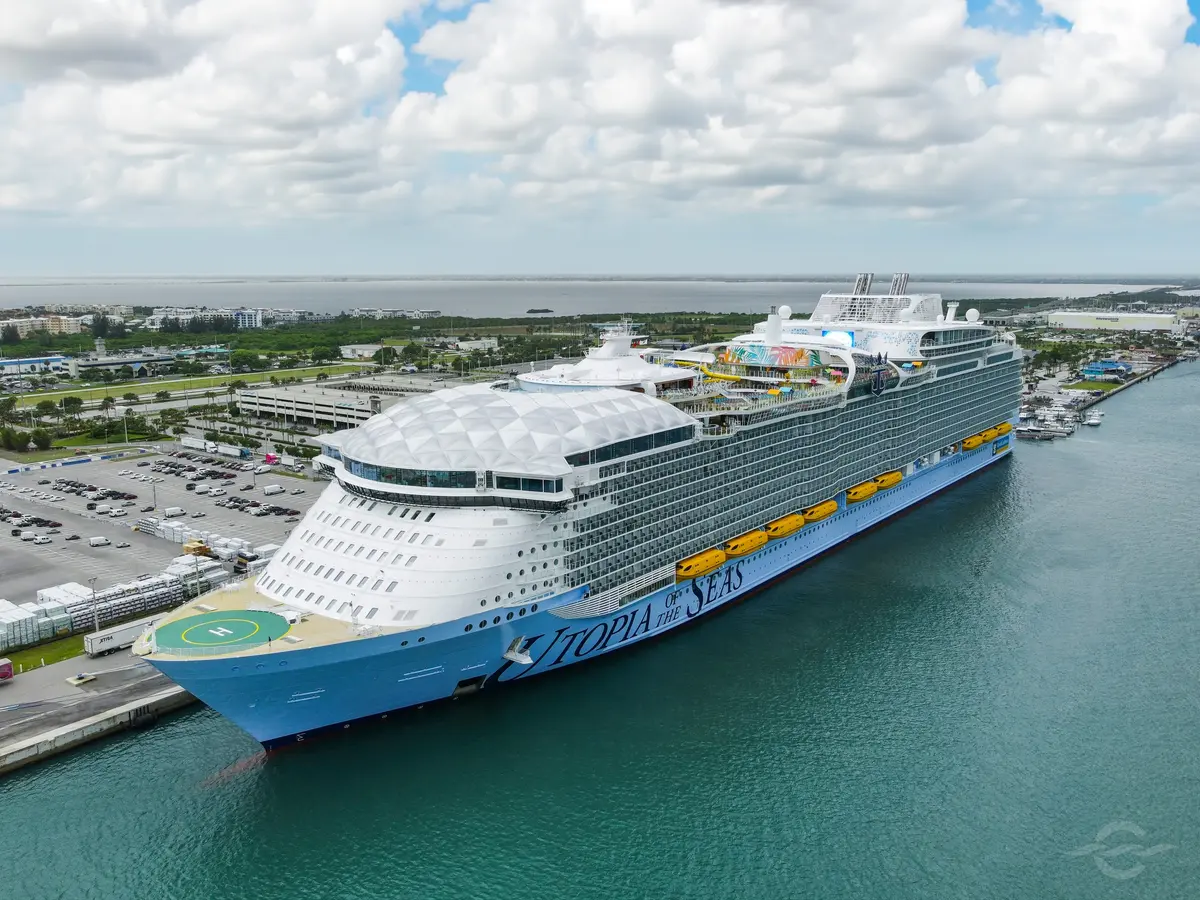
The exact time varies, but usually a ship is pulling up to the pier and docking around 6 or 7am. Some of their newest ships, like Star of the Seas, will arrive even earlier.
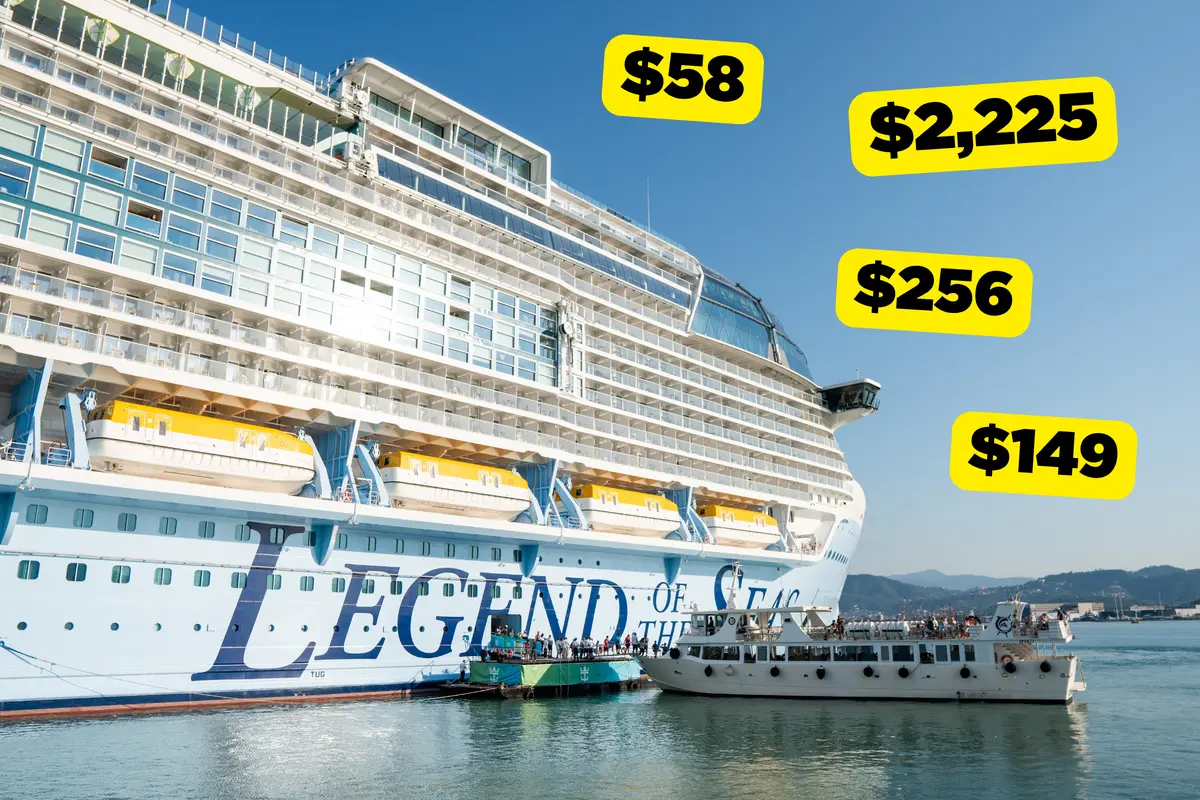
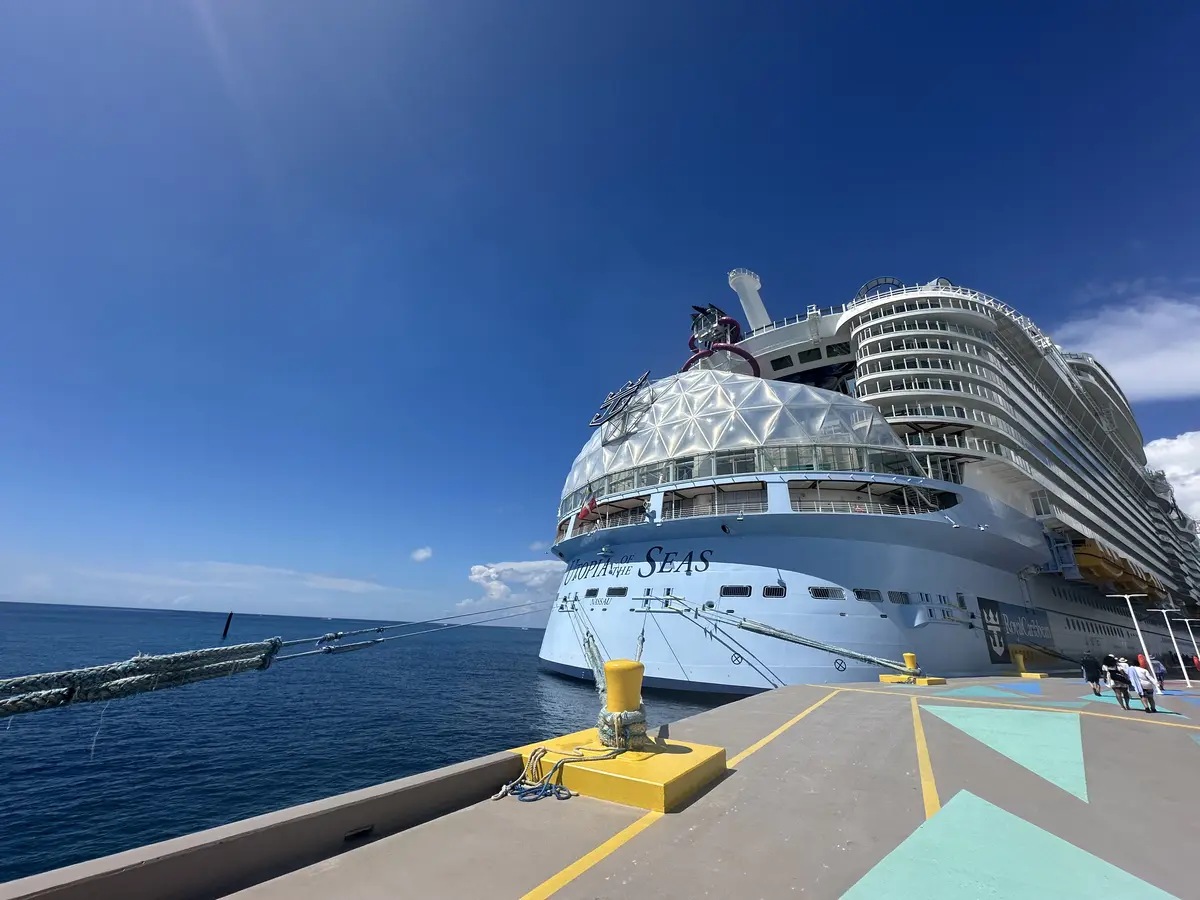
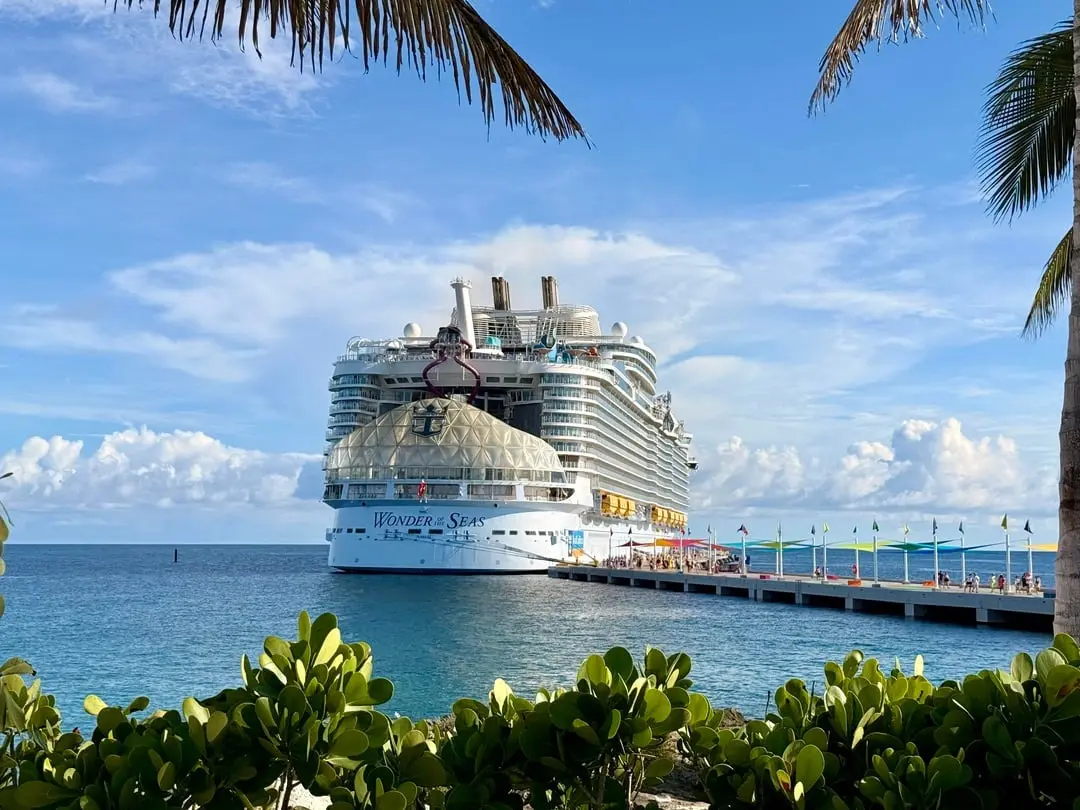
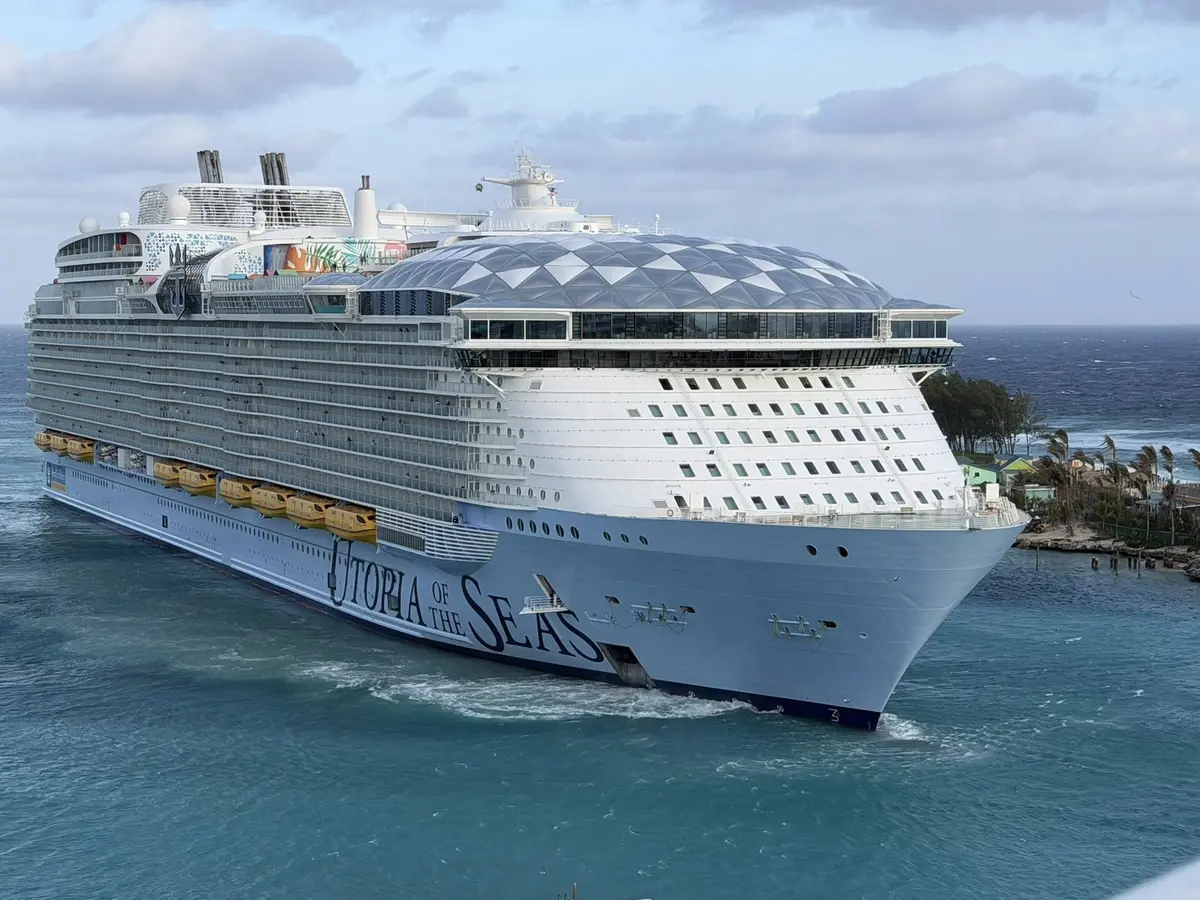
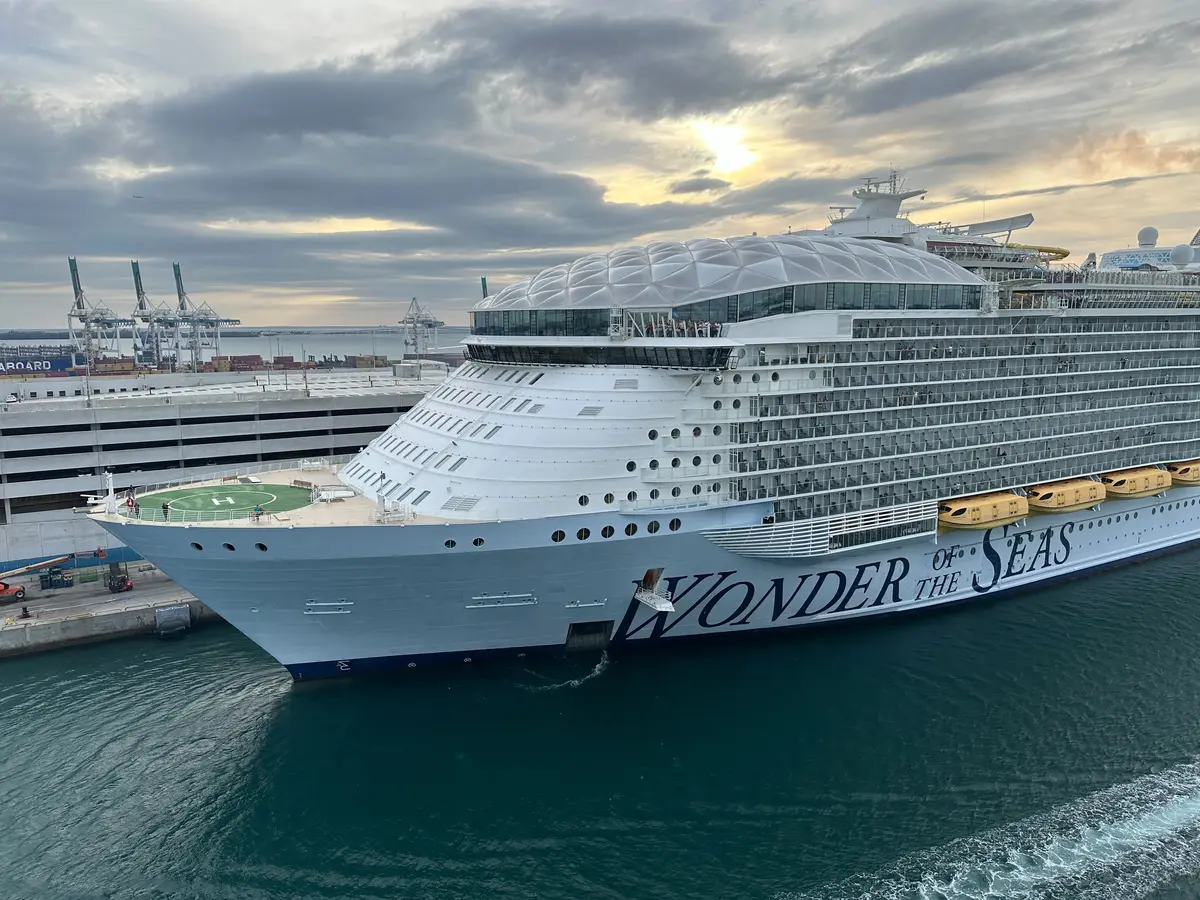
Docking is a slow procedure, where the ship maneuvers itself alongside the pier using its bow thrusters and Azipods to position itself. Once docked, it will be tied up to ensure it won't go anywhere.
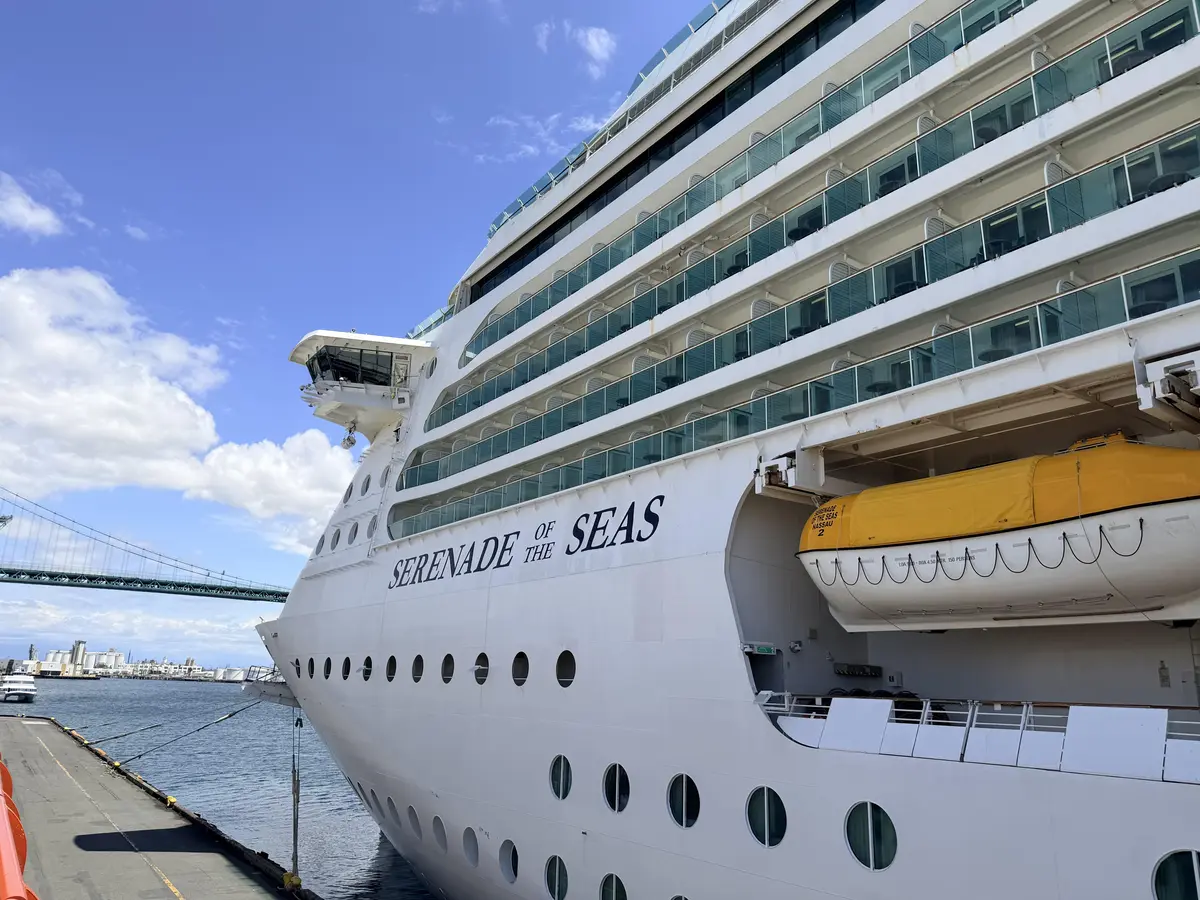
But before anyone can leave the ship, it has to be cleared by the local authorities.
Every country has its own procedures. This could take a matter of minutes, or a thorough inspection may be required that could take hours.
In the United States, both the U.S. Coast Guard and the Department of Homeland Security are involved in allowing a cruise ship to be approved for disembarkation.
Passengers, luggage, and waste are all systematically taken off the ship
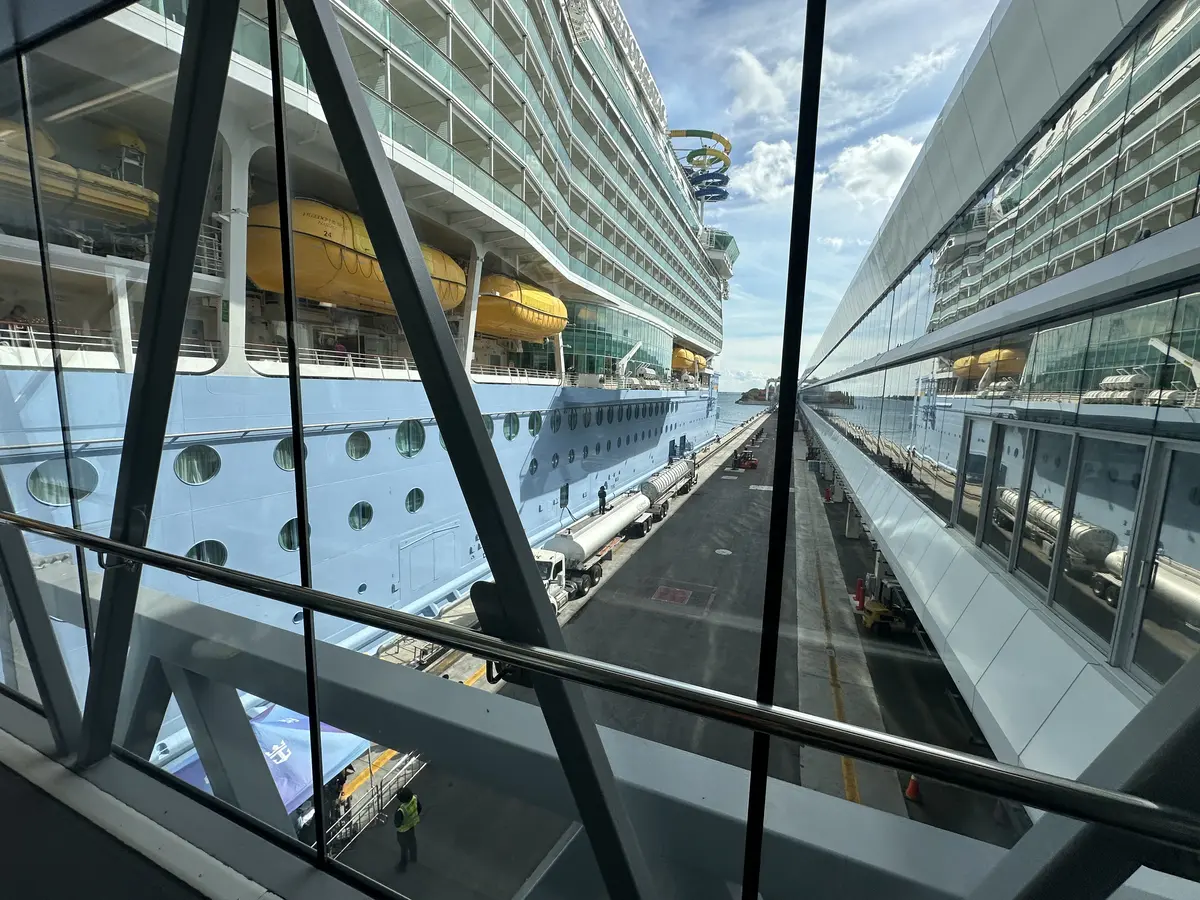
Once cleared, Royal Caribbean begins the process of getting everyone and everything off the ship that won't be sailing for the next voyage.
Passengers are directed to walk off the ship based on their luggage. If they are carrying their own luggage, they can walk off the ship as soon as the ship has been cleared.
But Royal Caribbean gives passengers the option to deliver their luggage from the ship into the cruise terminal. Bags are left out overnight and picked up by crew members to be delivered in the morning.
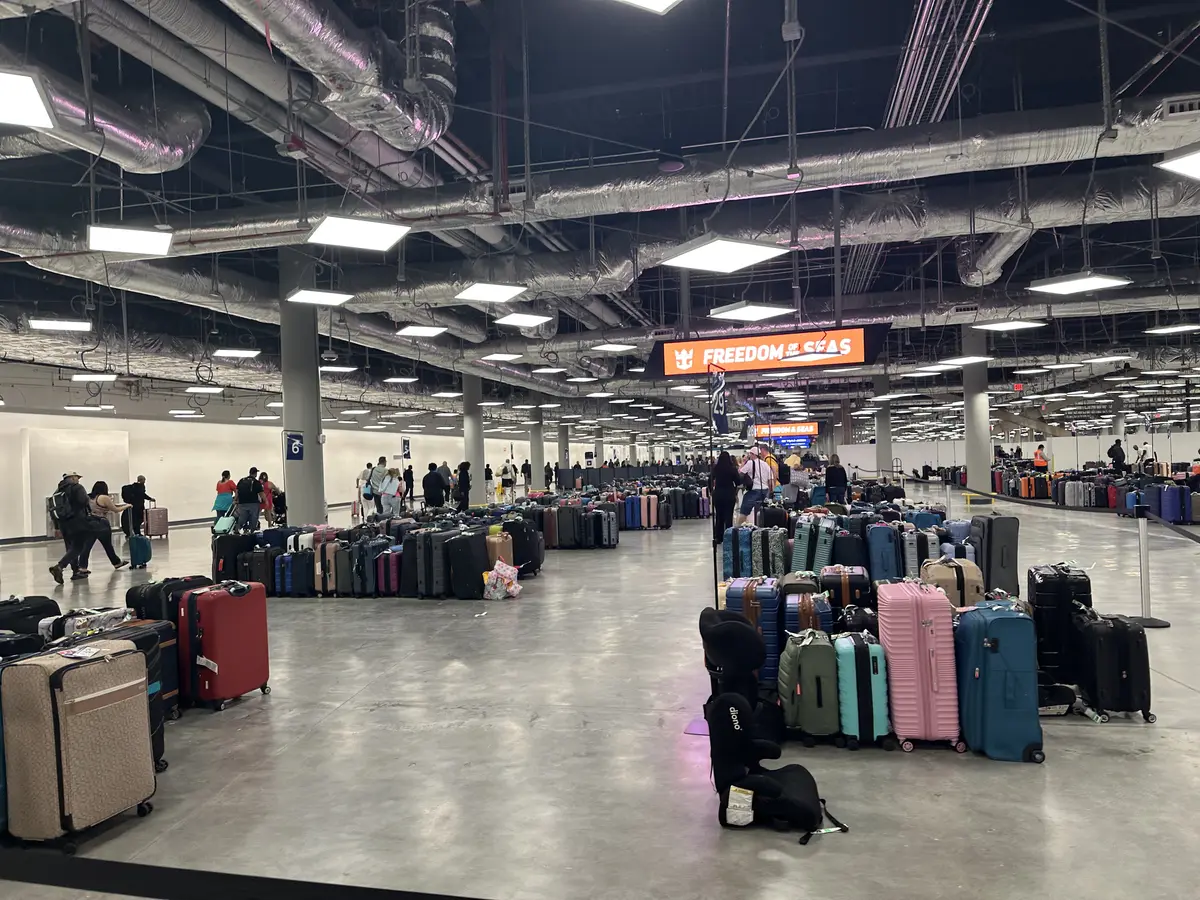
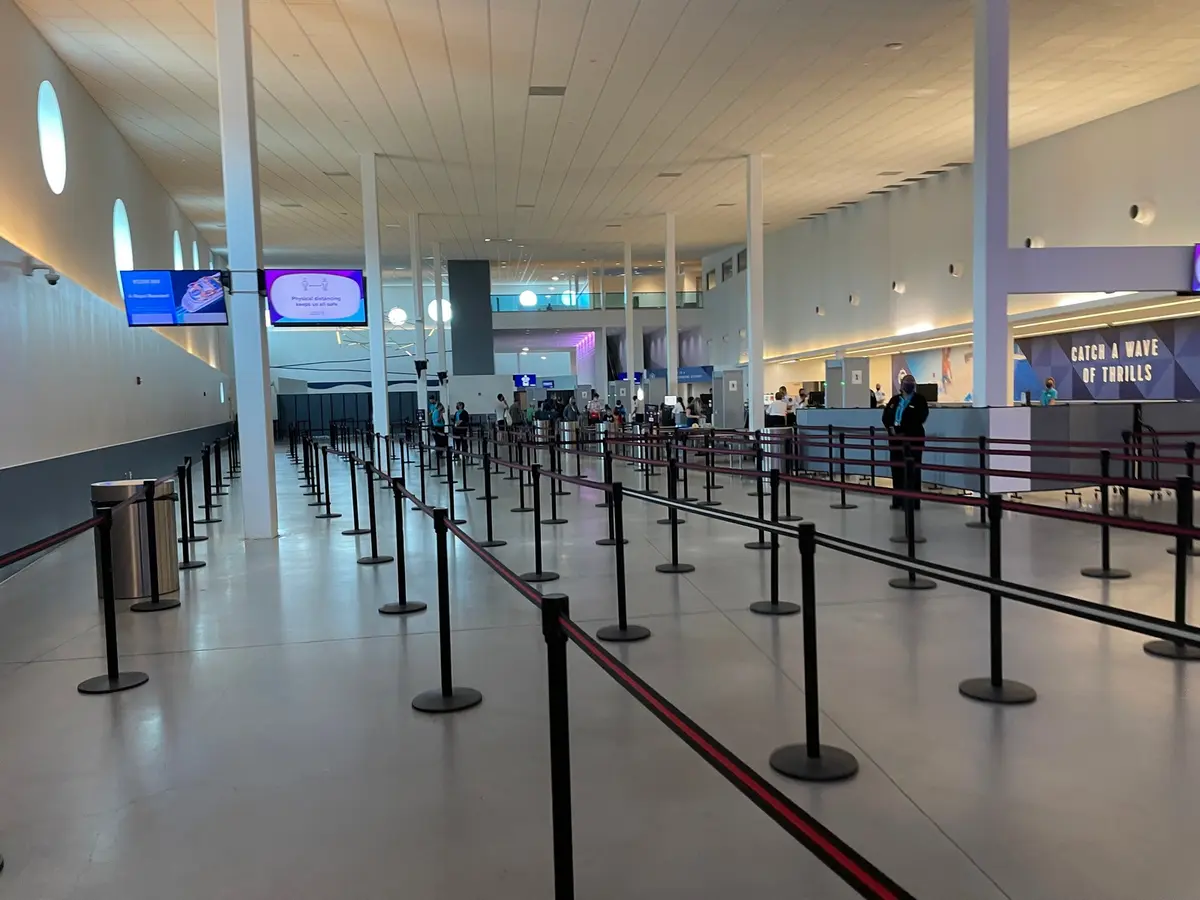
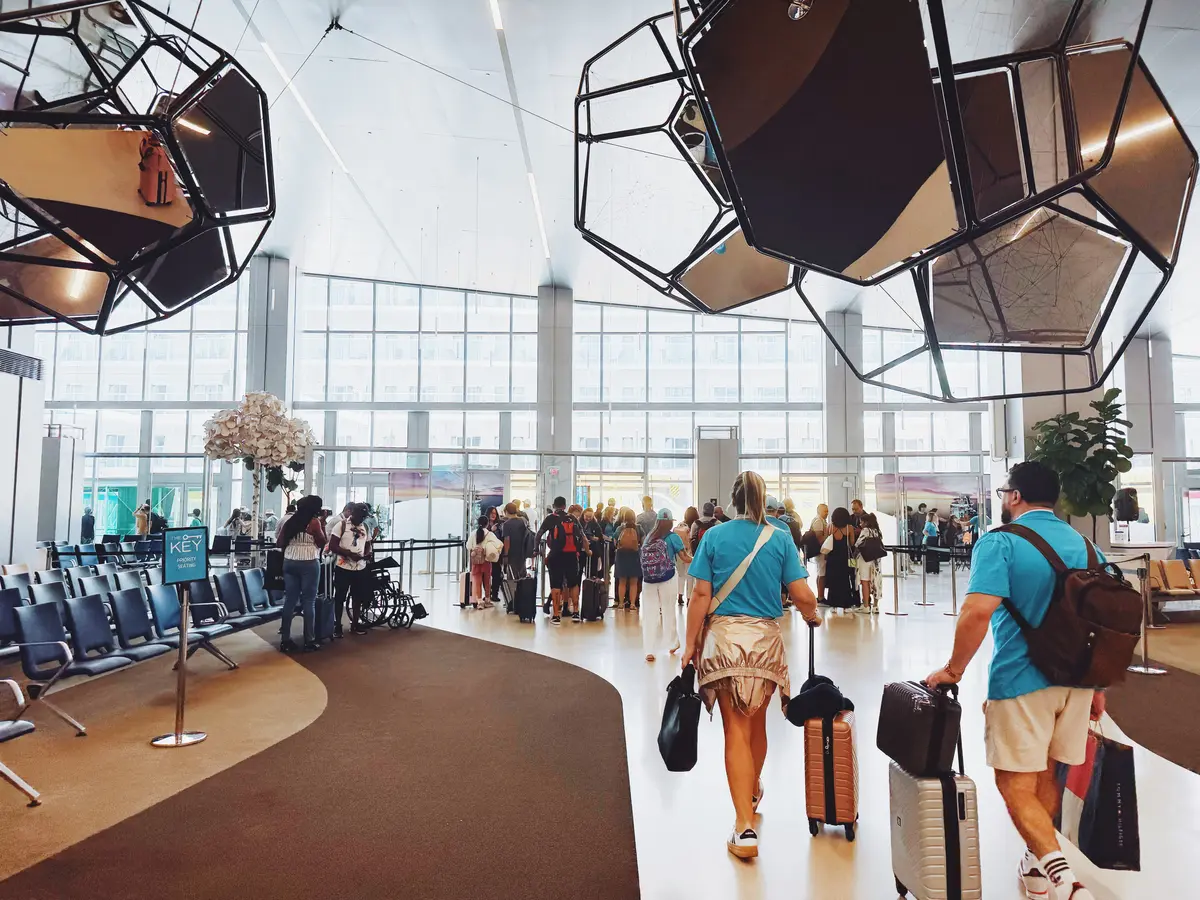
All of that luggage is brought off the ship in groups, and staged in the cruise terminal to be picked up.
Guests are able to disembark once their bags are ready for pickup in the terminal, and that's done by luggage tag numbers. An announcement is made to alert guests when a certain baggage number is ready for pickup.
Meanwhile, other crew members are moving trash and waste off.
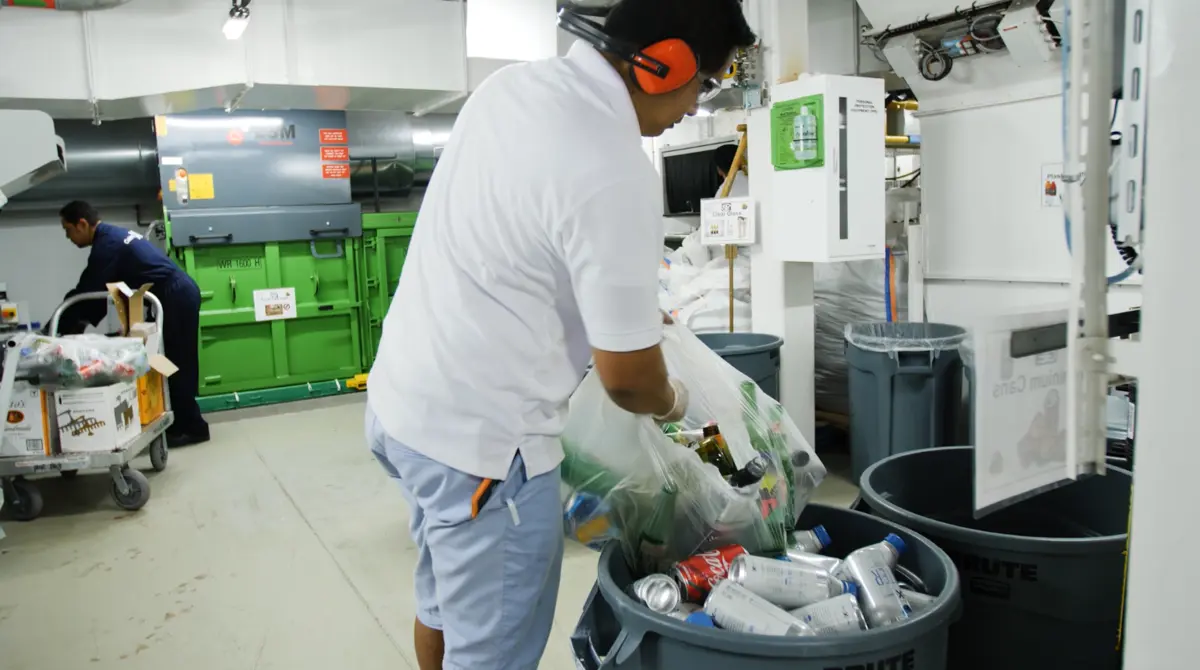
Royal Caribbean has agreements in place to remove waste from the ship and have it transported to a waste management facility. This includes food, human waste, recycling, and any other goods they won't need anymore.
Because every ship has a waste treatment facility onboard, all the waste is as compact and prepared to be offloaded. Glass, cardboard, plastic, and metal can all be recycled onboard. Then plastic, aluminum, paper, and glass is transported through a vendor off the ship.
Every passenger is usually off the ship by 9 or 10am. In the United States, maritime laws require the ship to be at a "zero count", which means every single passenger must be off the ship before anyone else can get onboard.
Crew members begin cleaning everywhere
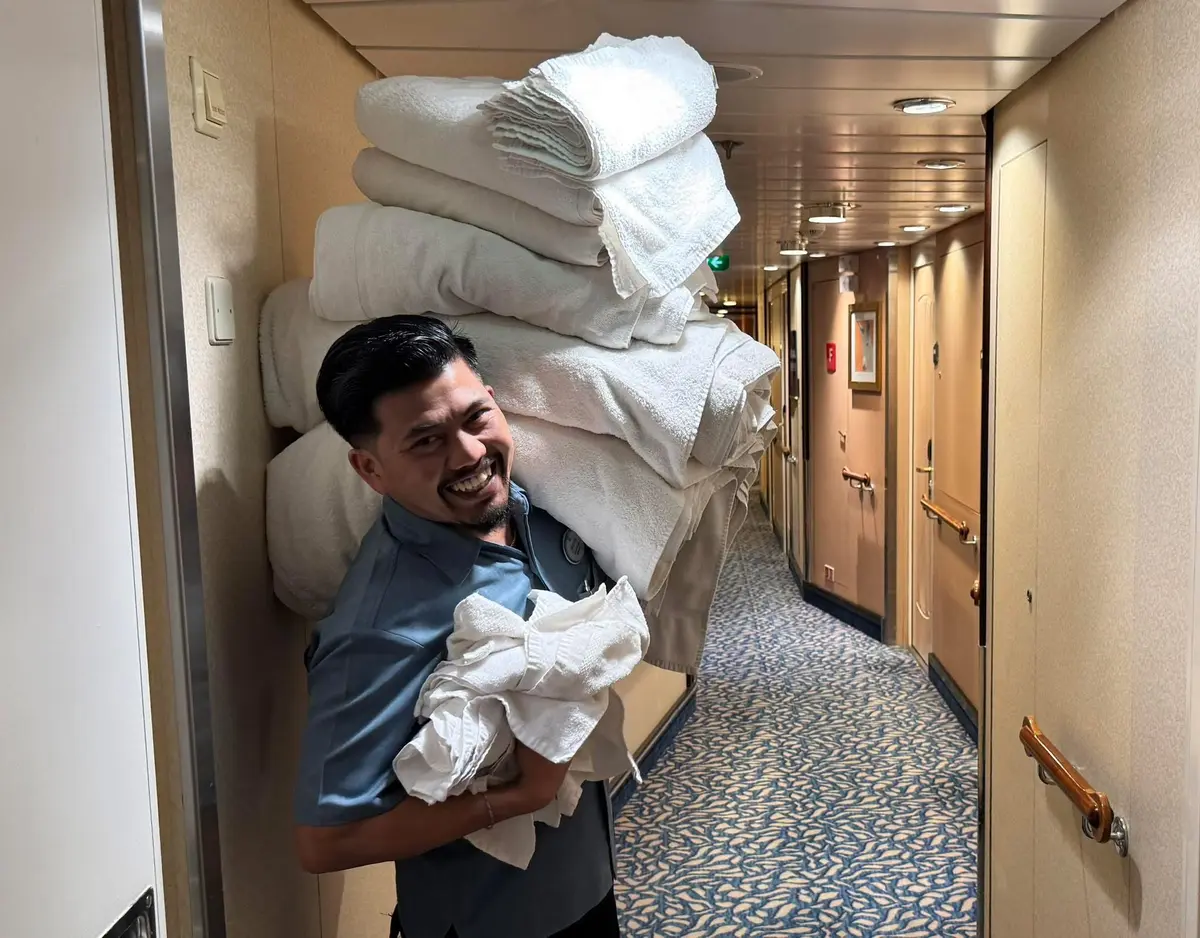
Concurrently, there are crew members that are cleaning and preparing every venue on the ship.
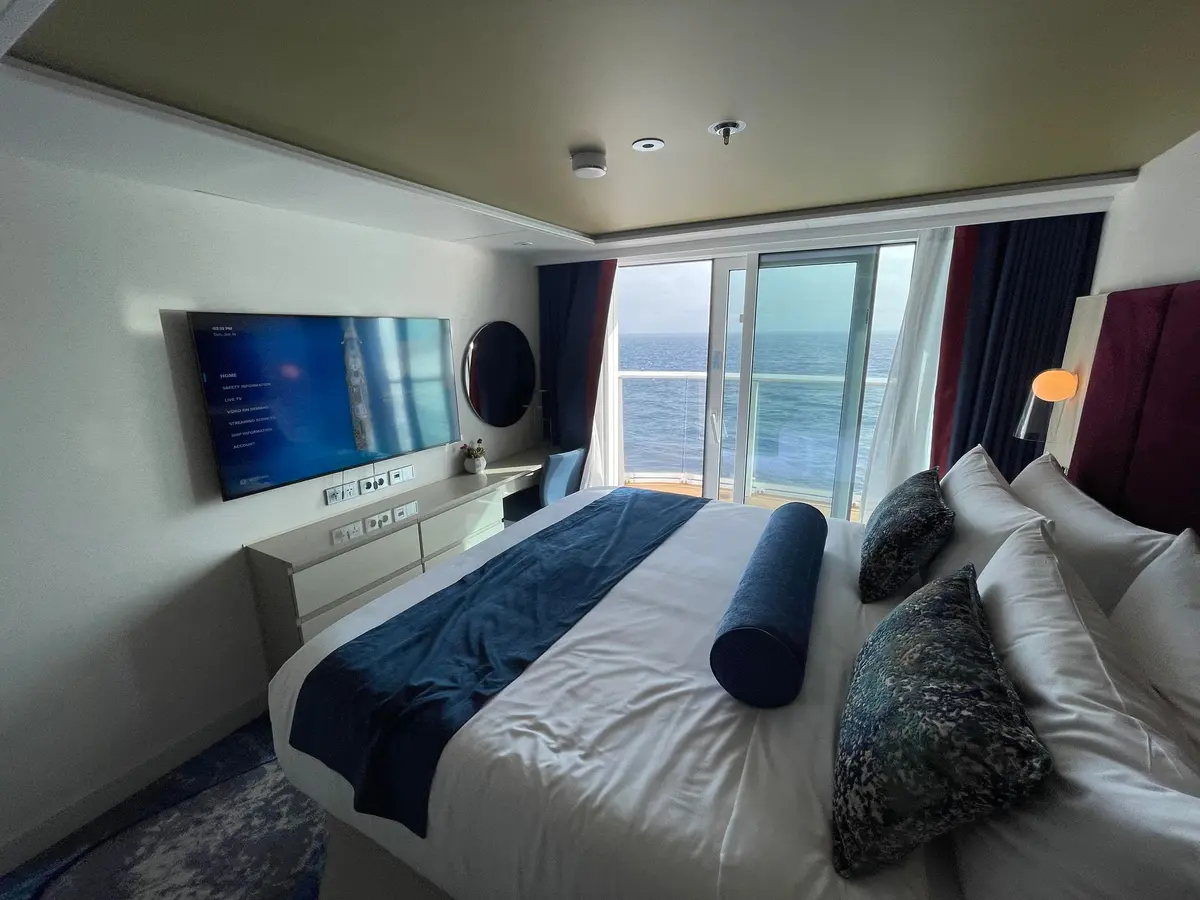
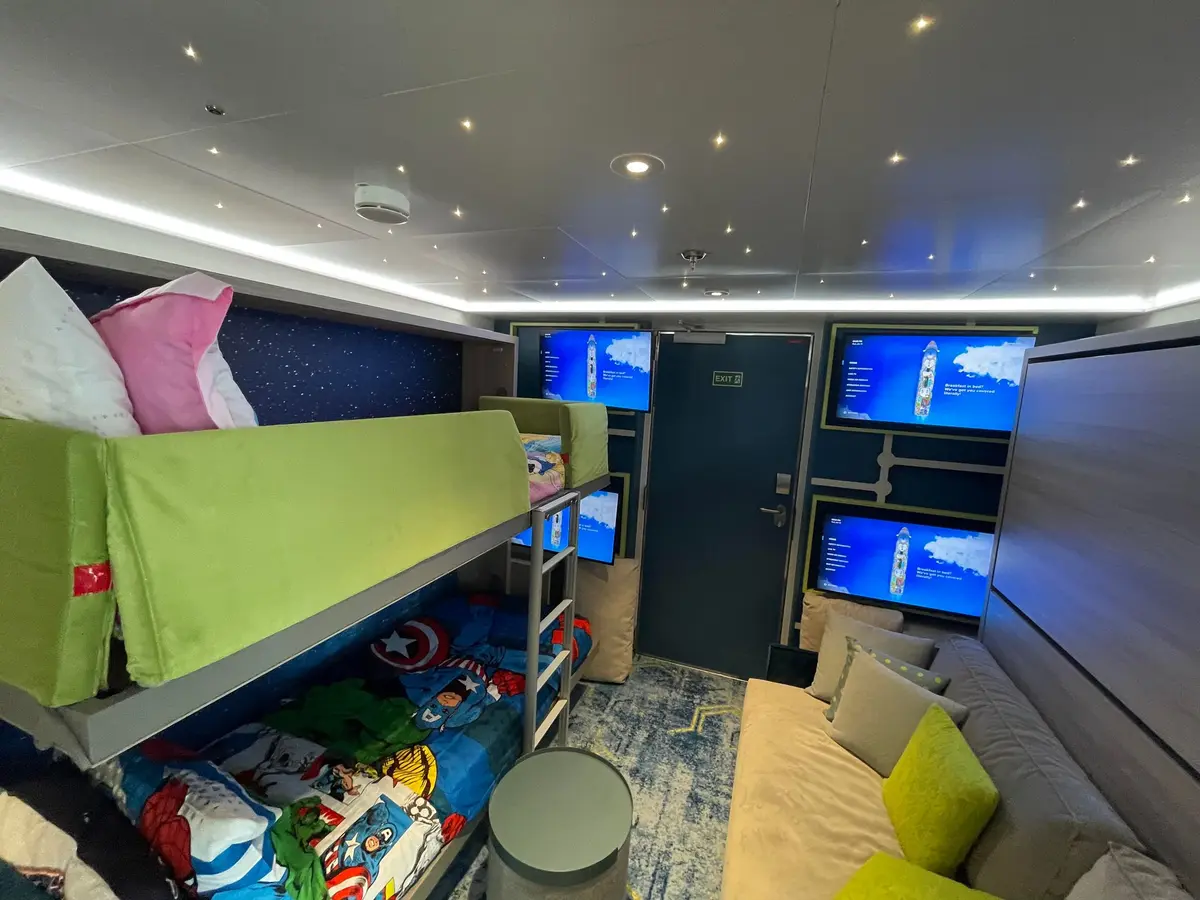
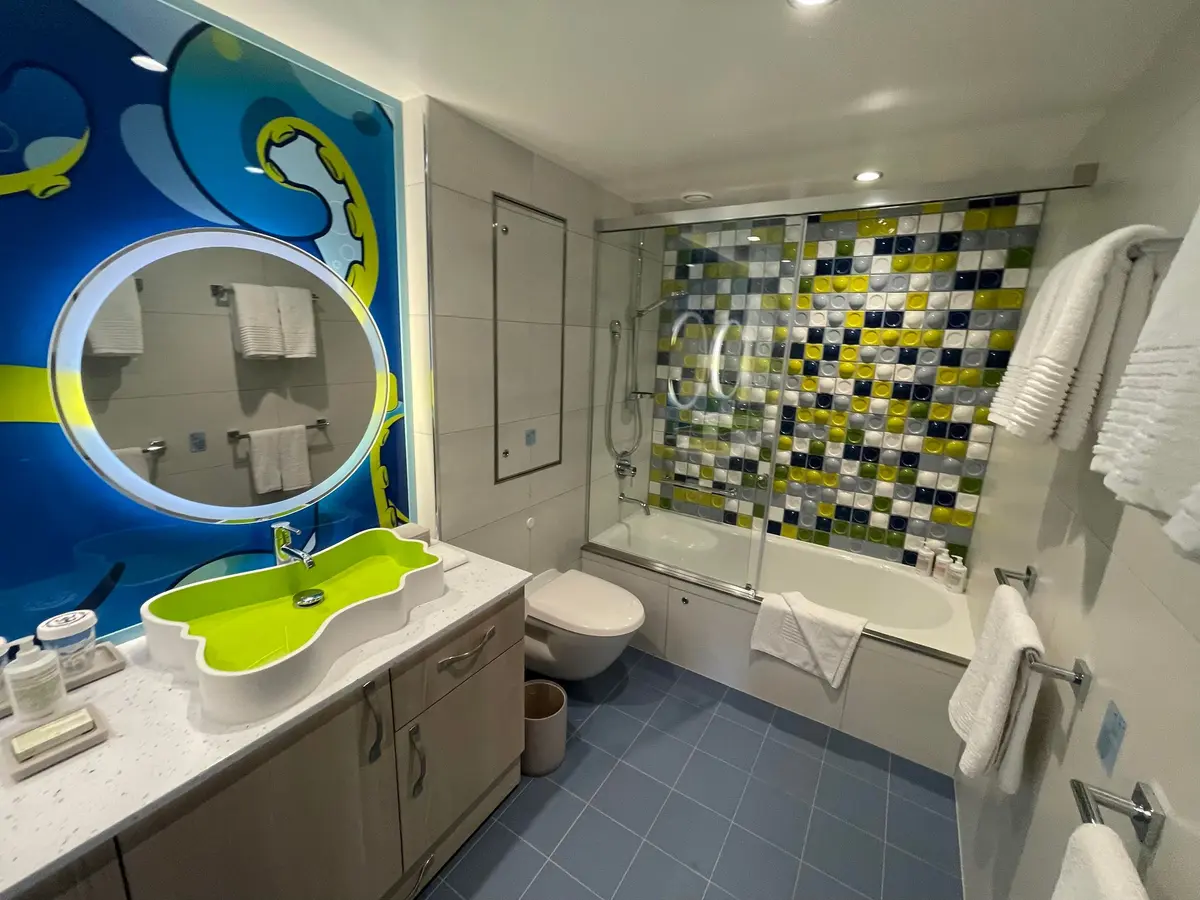
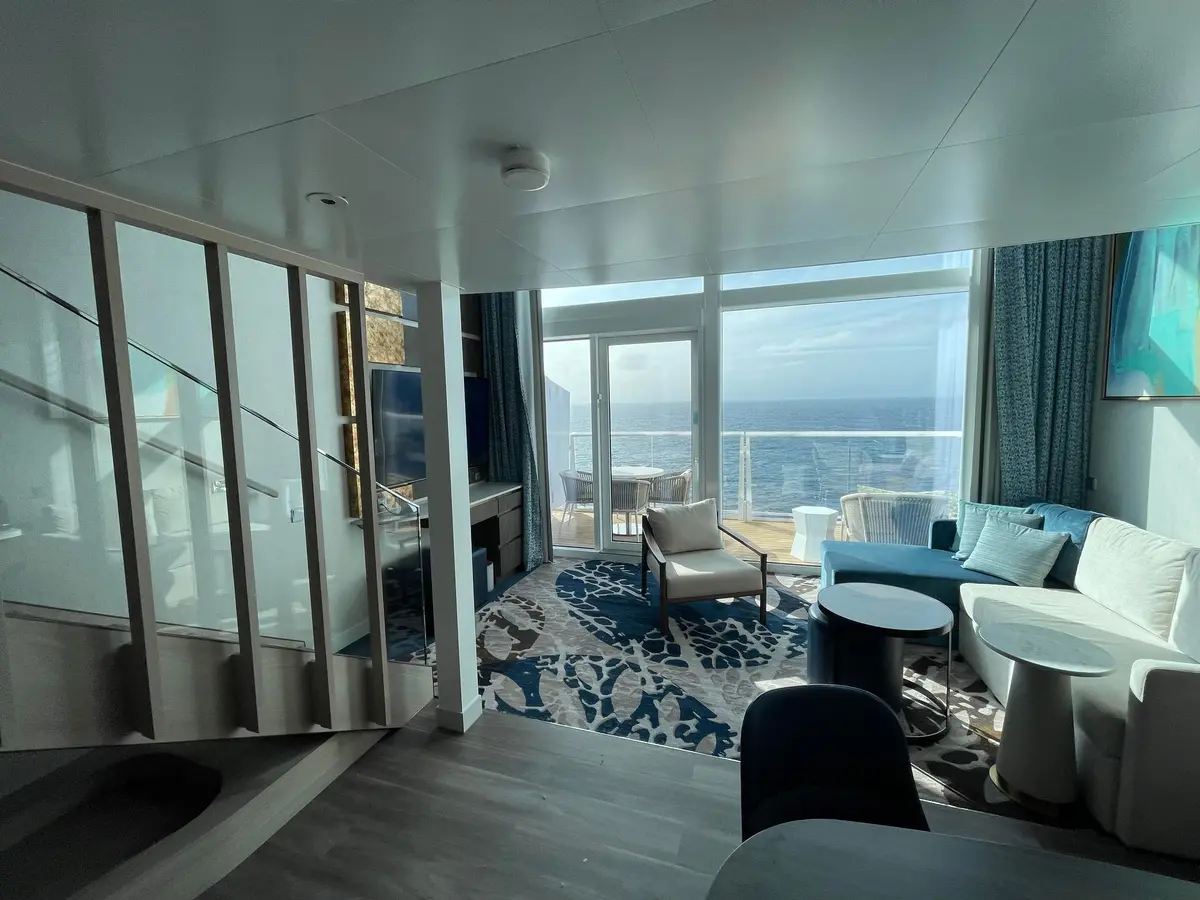
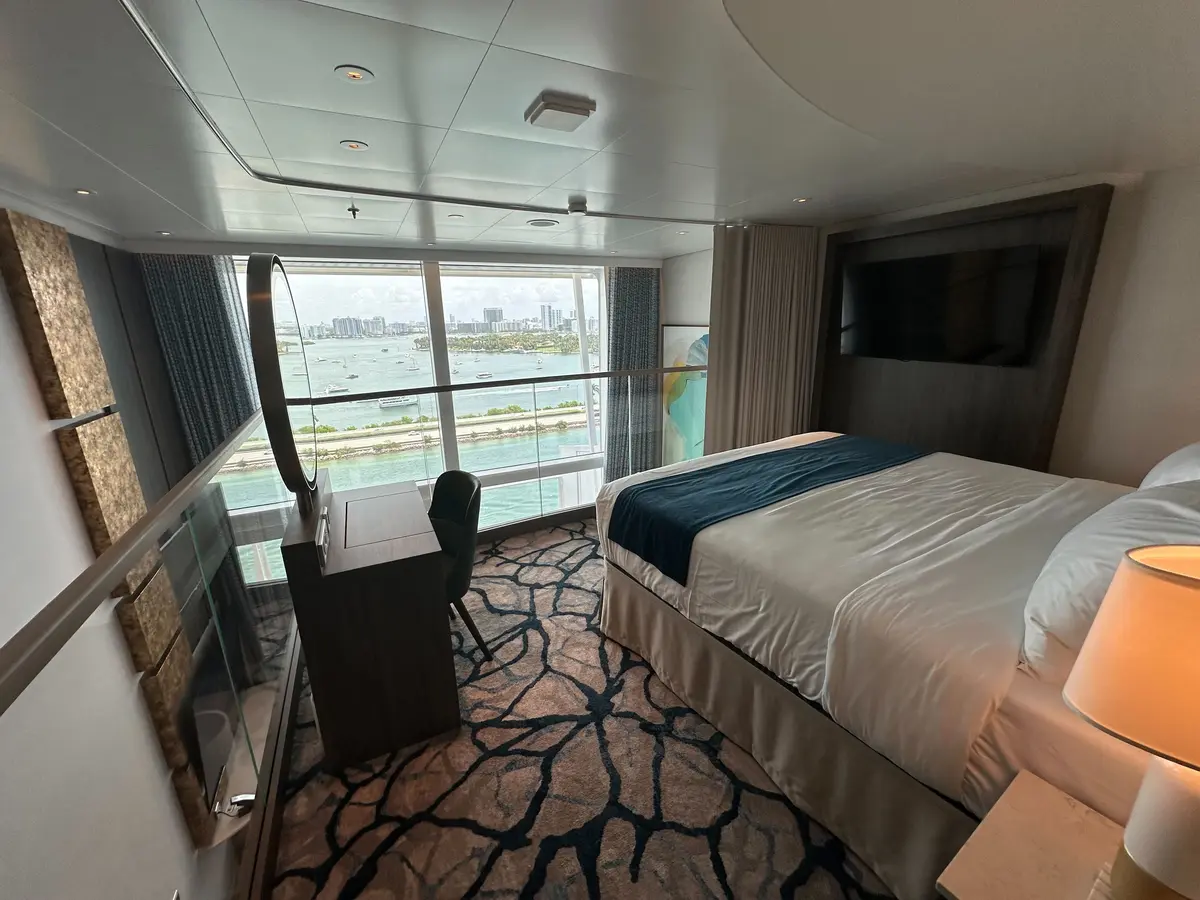
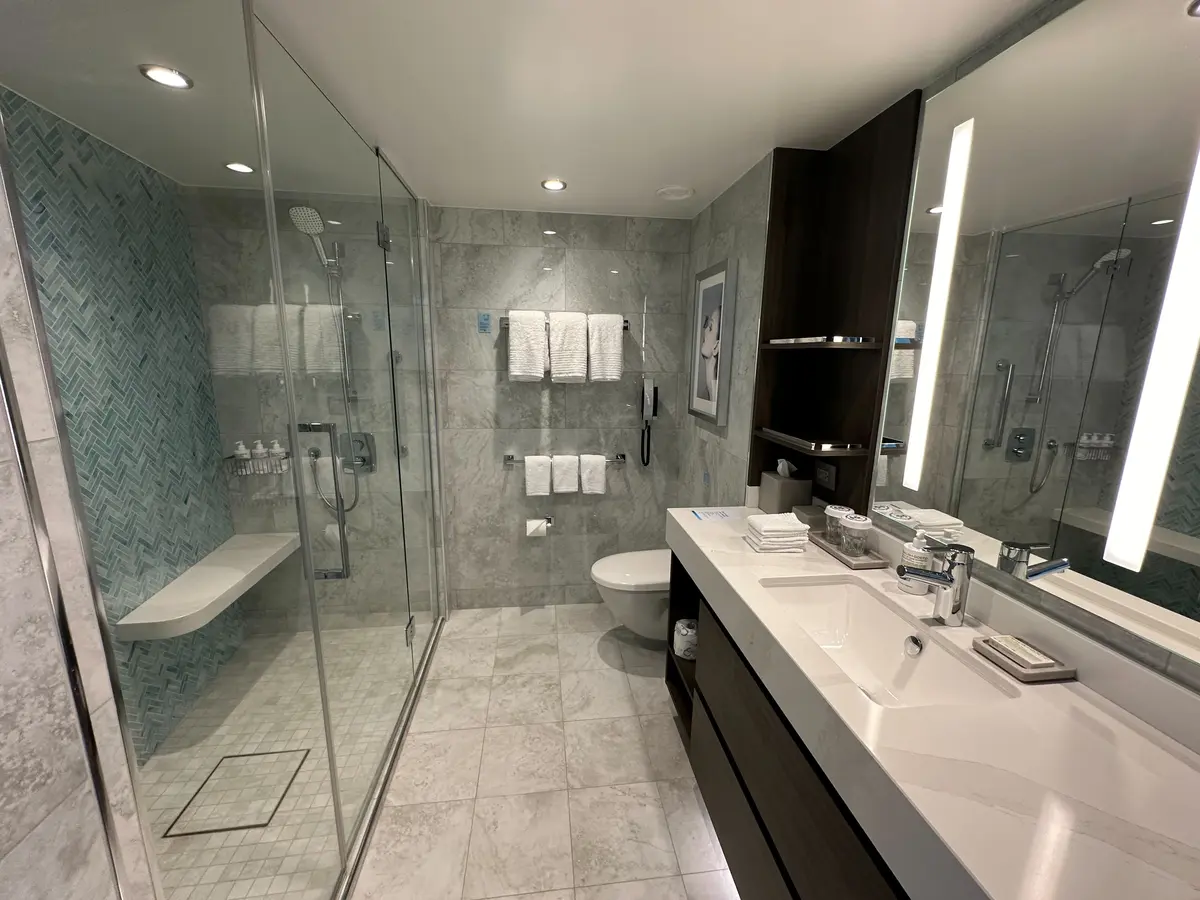
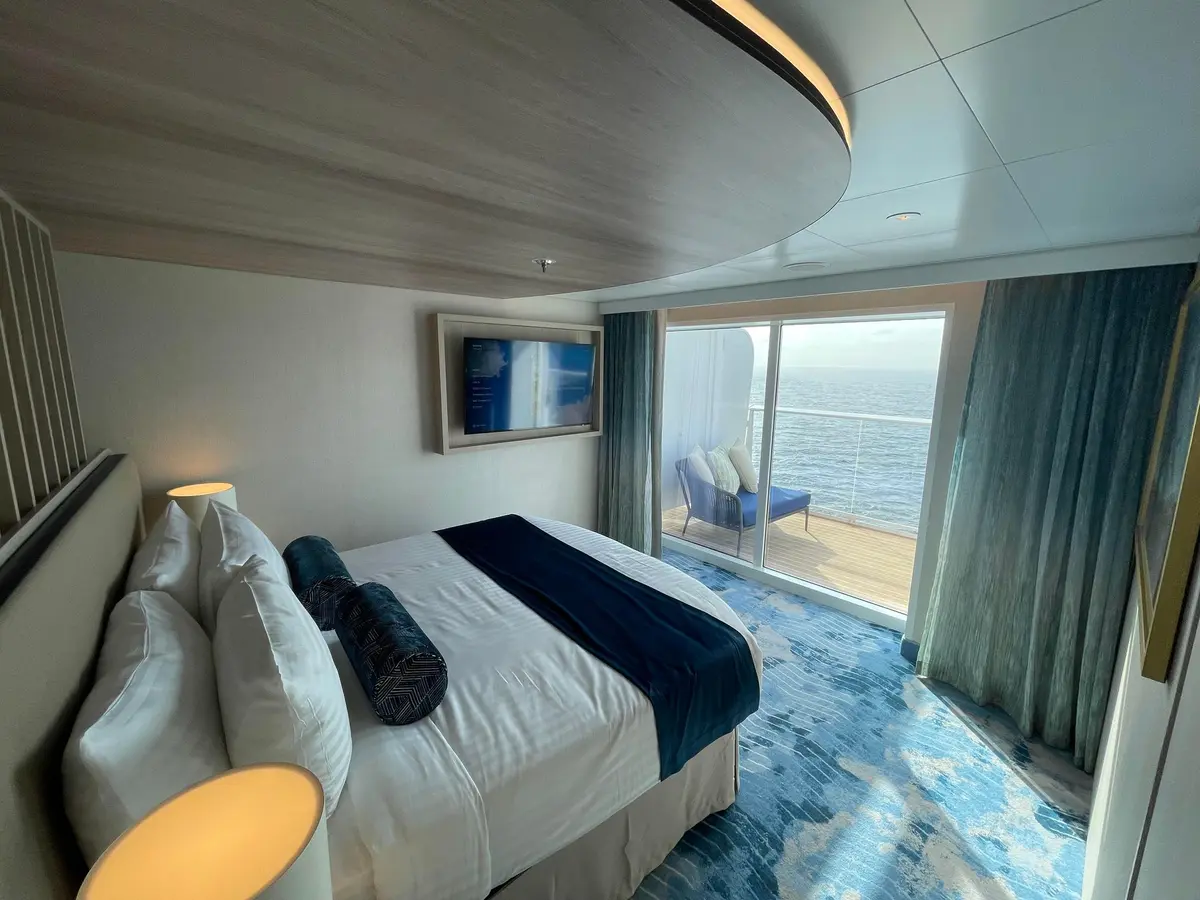
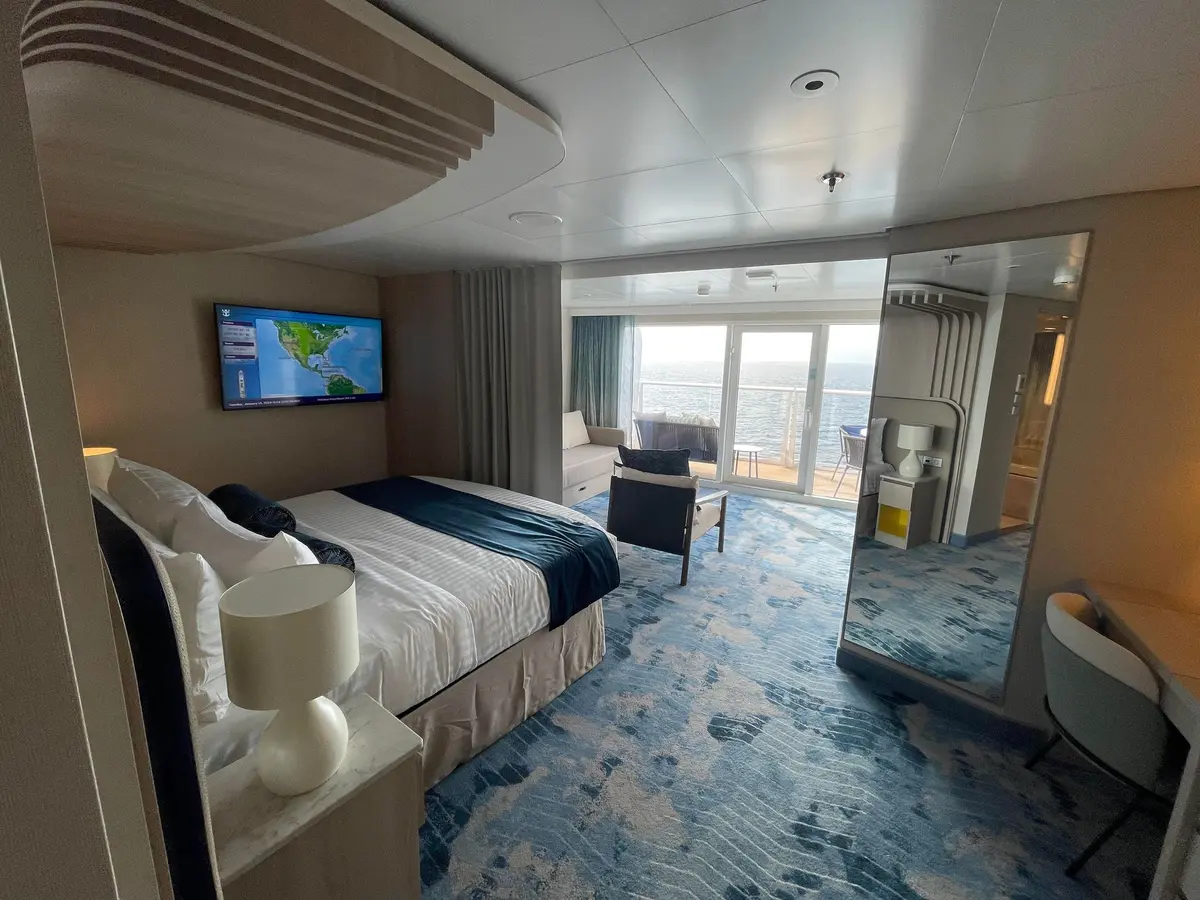
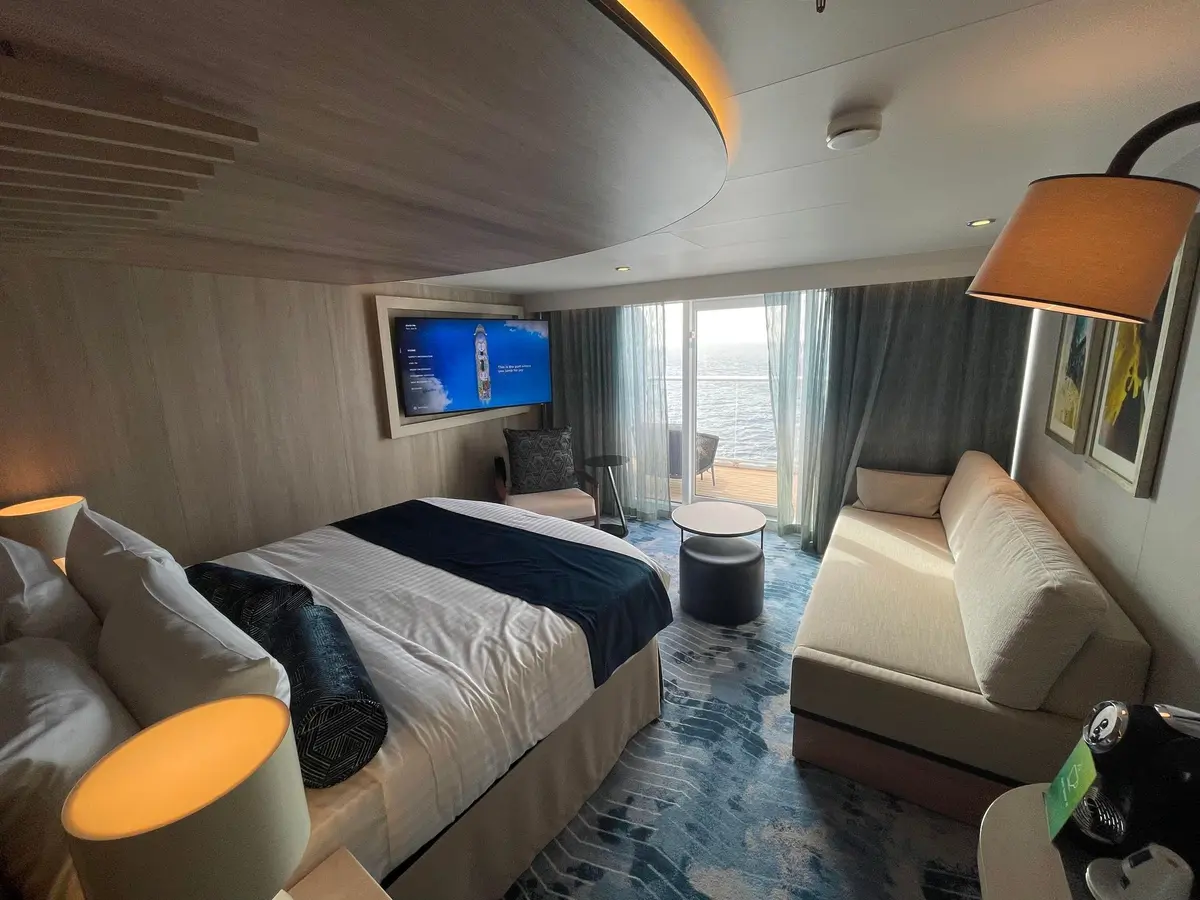
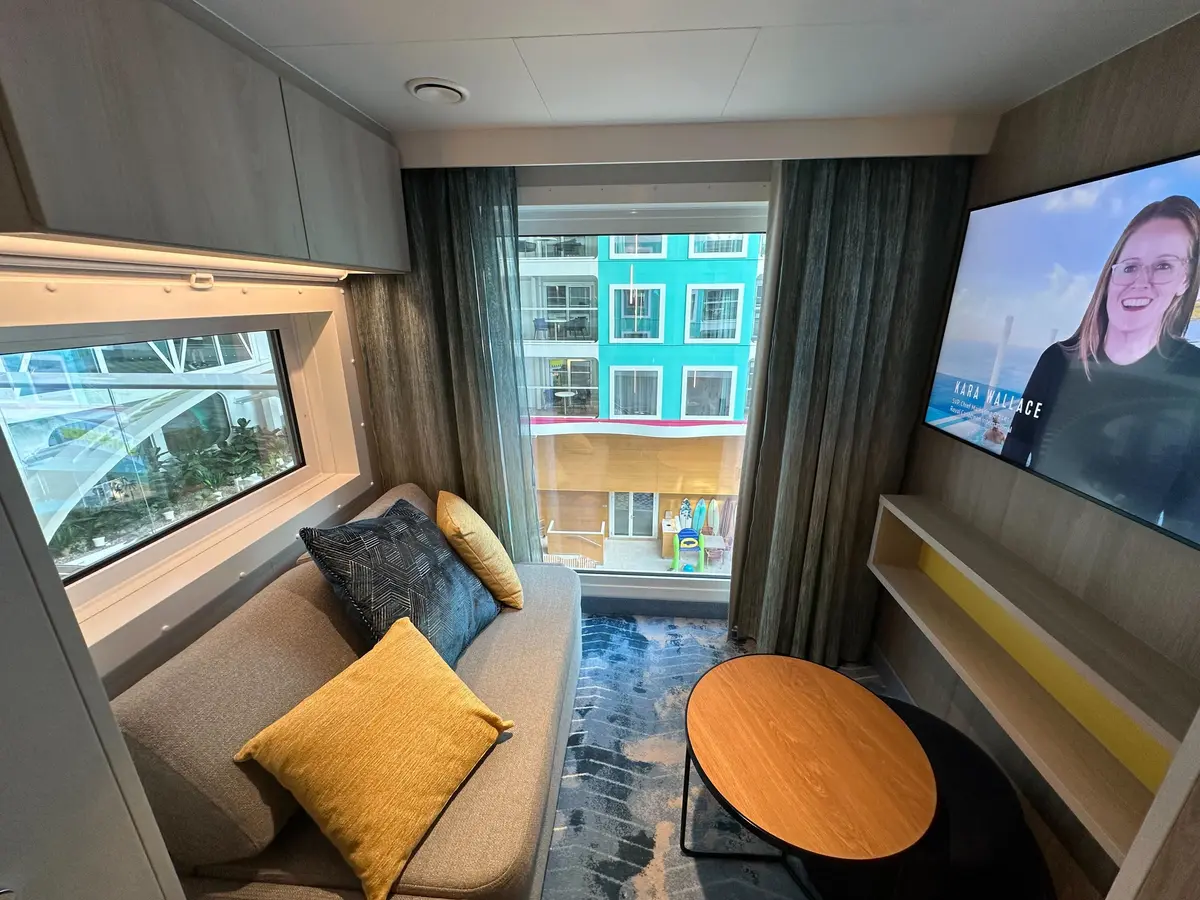
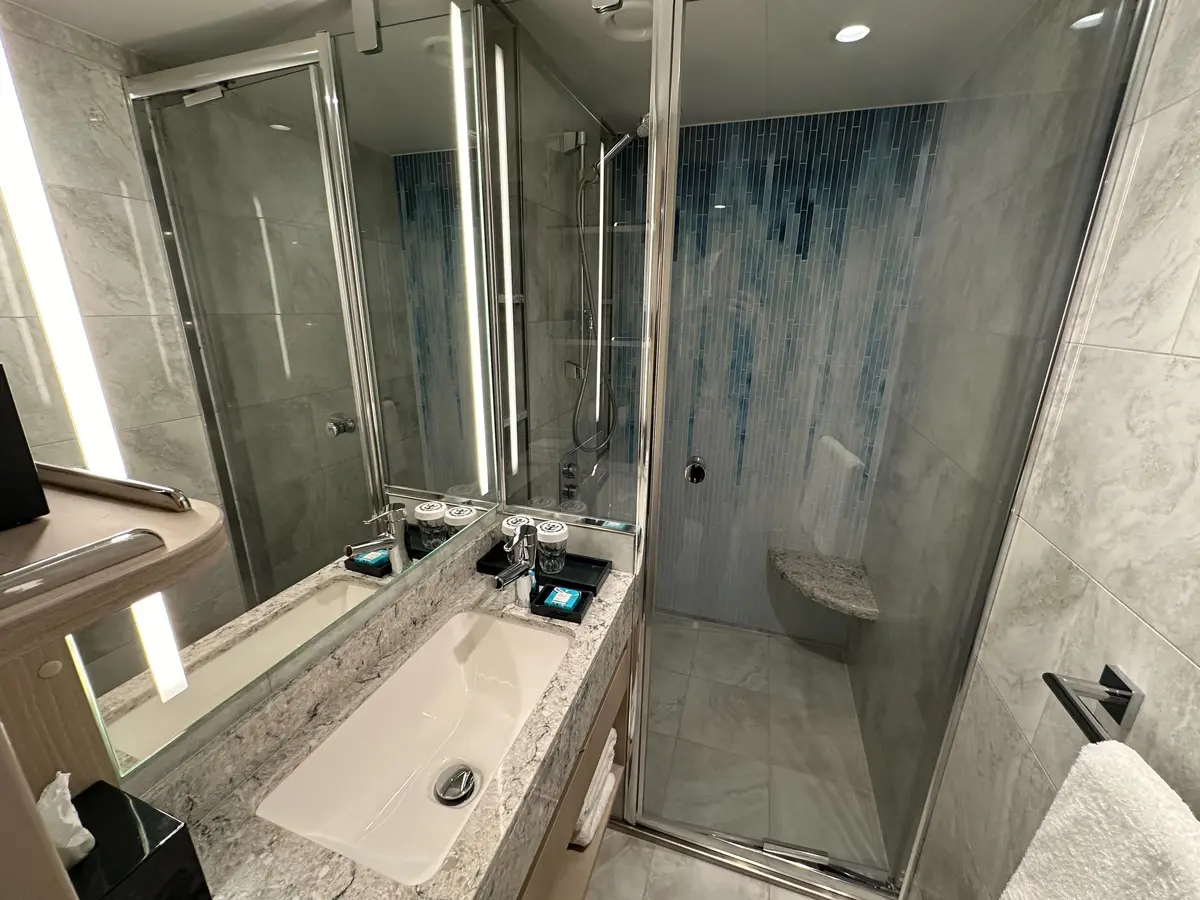
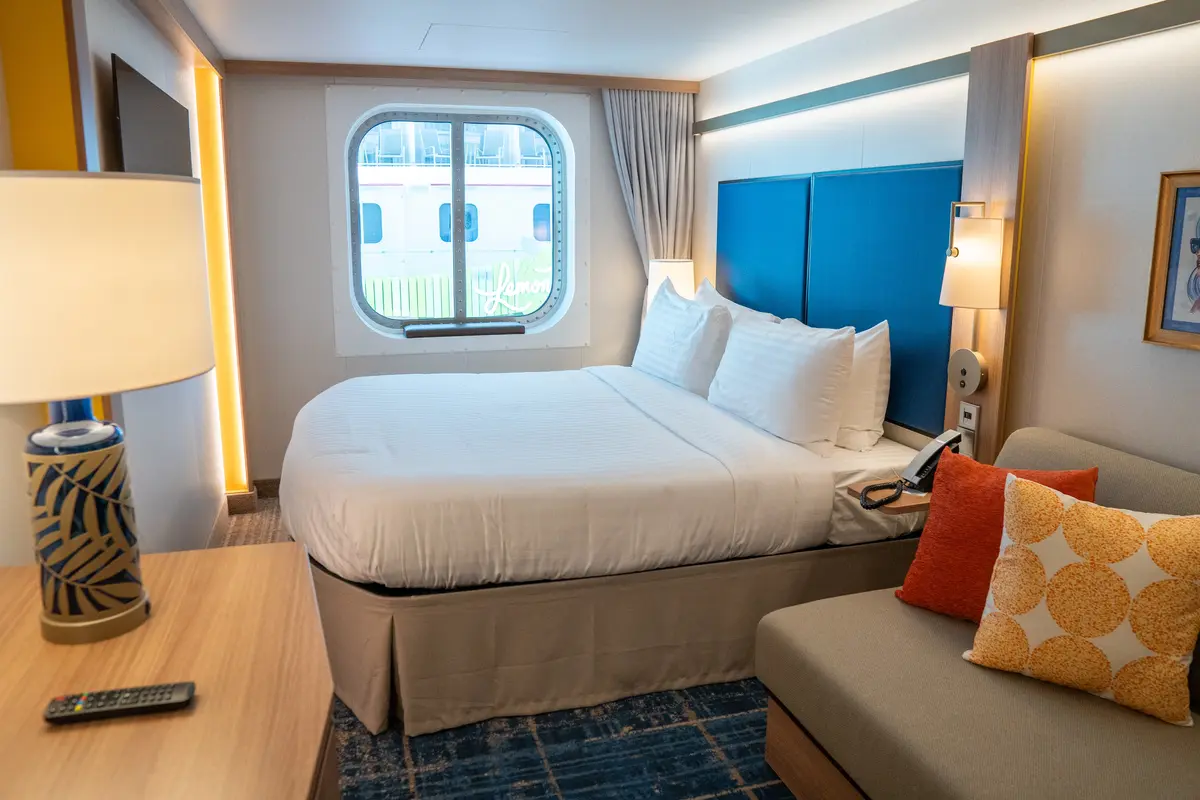
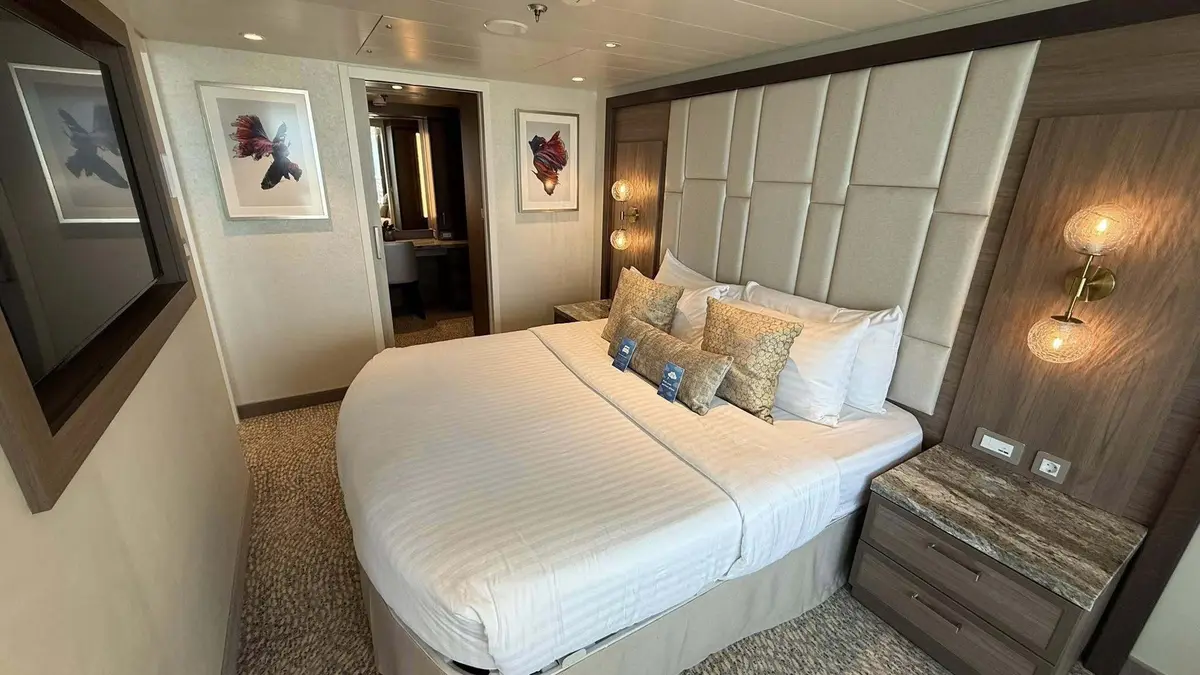
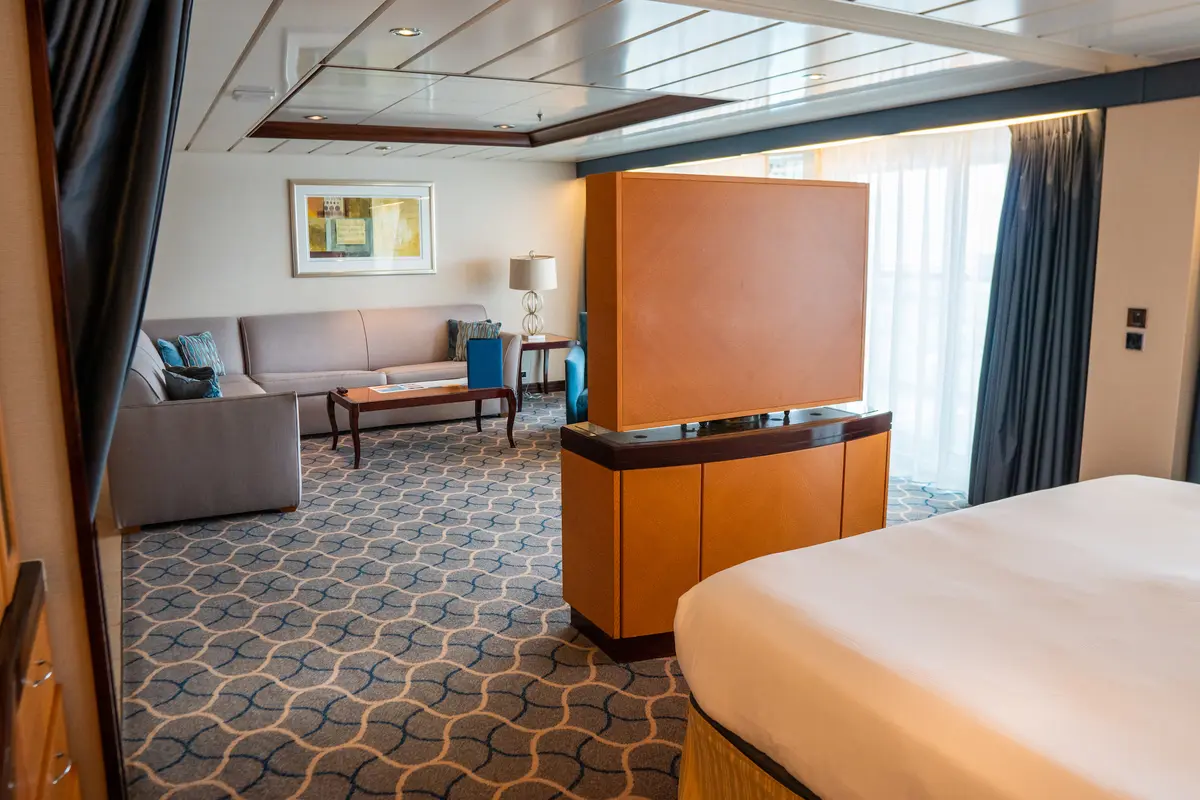
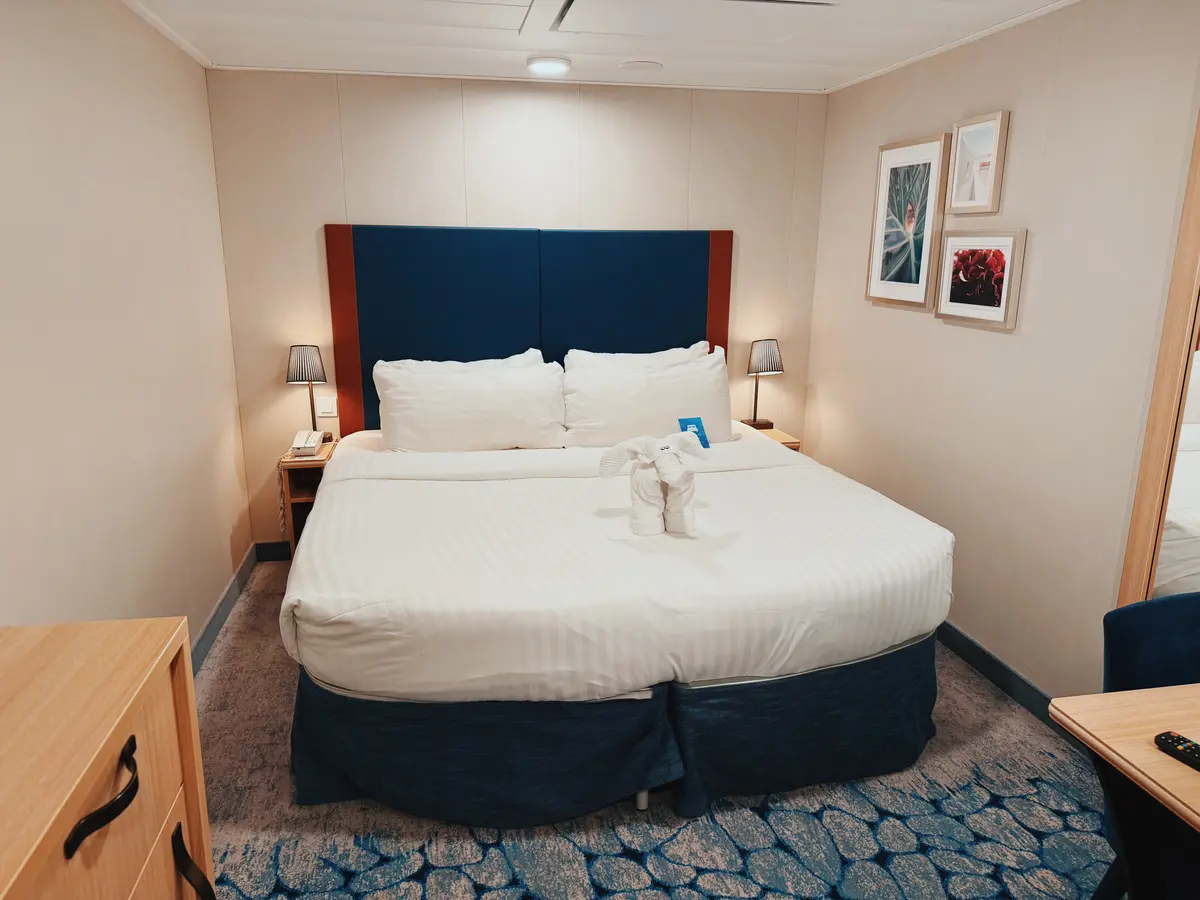
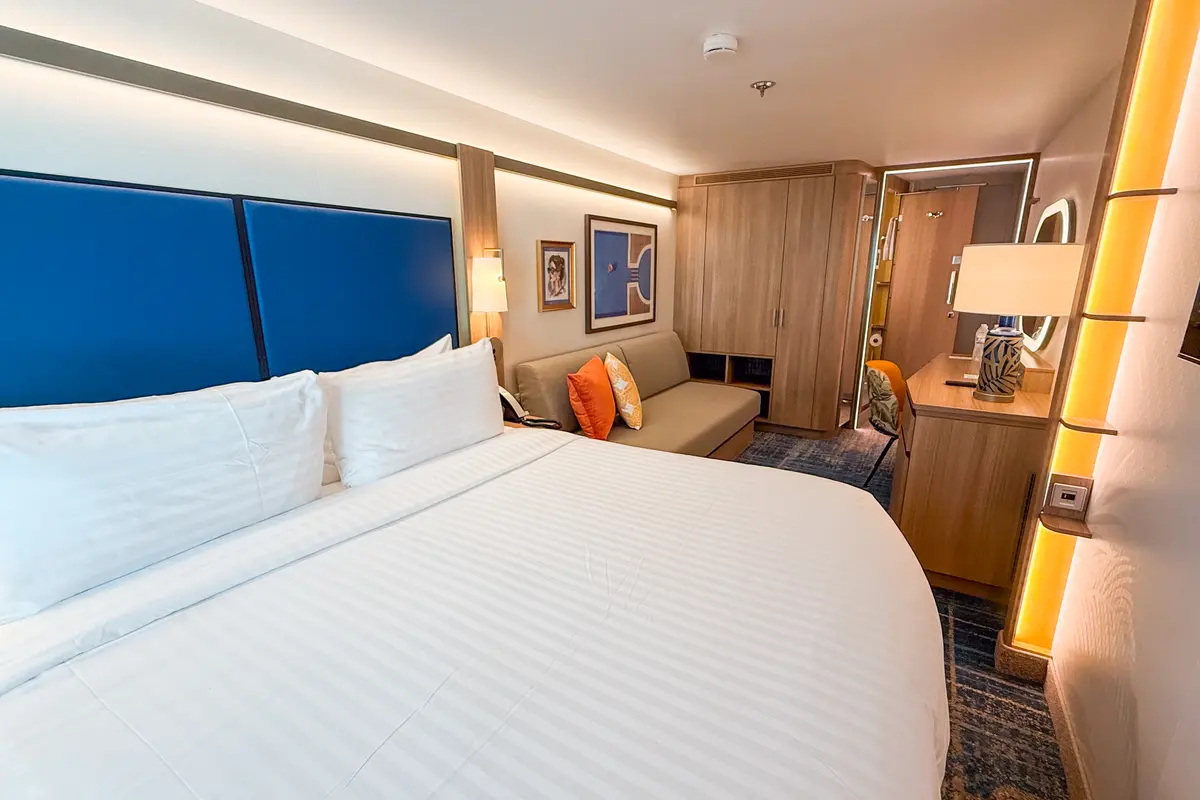
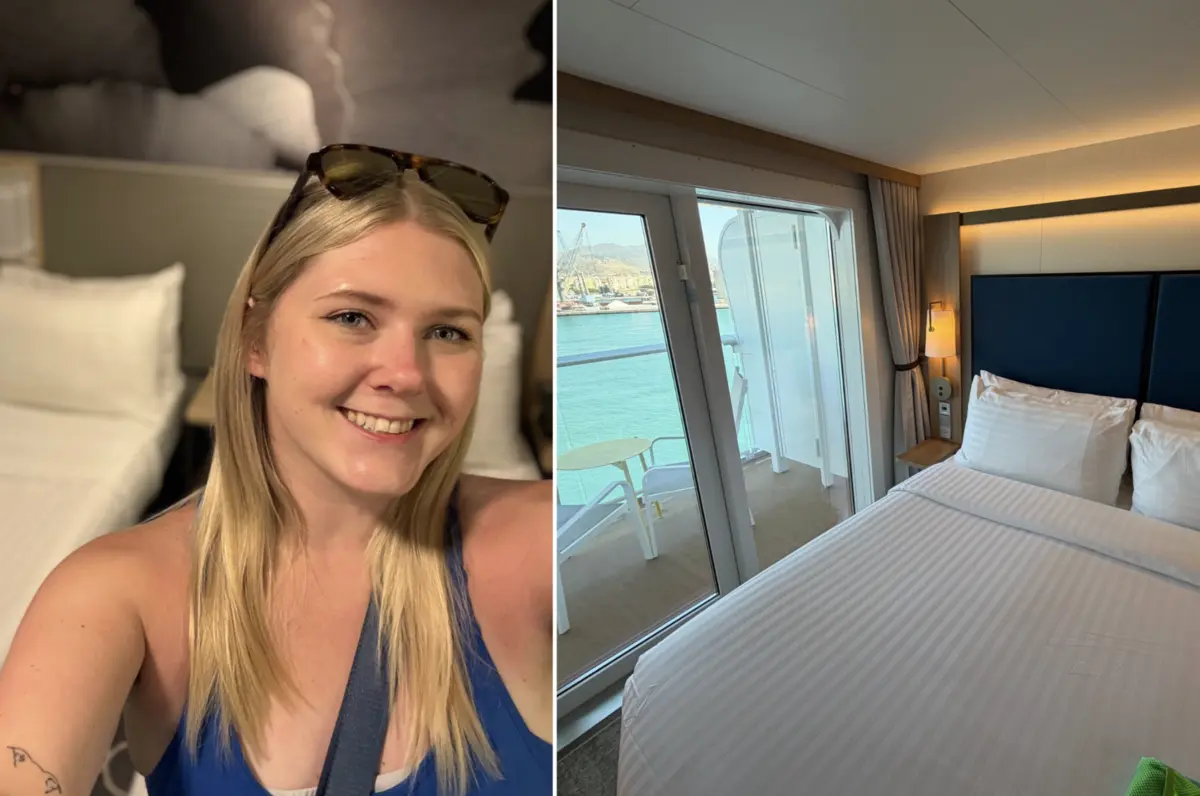
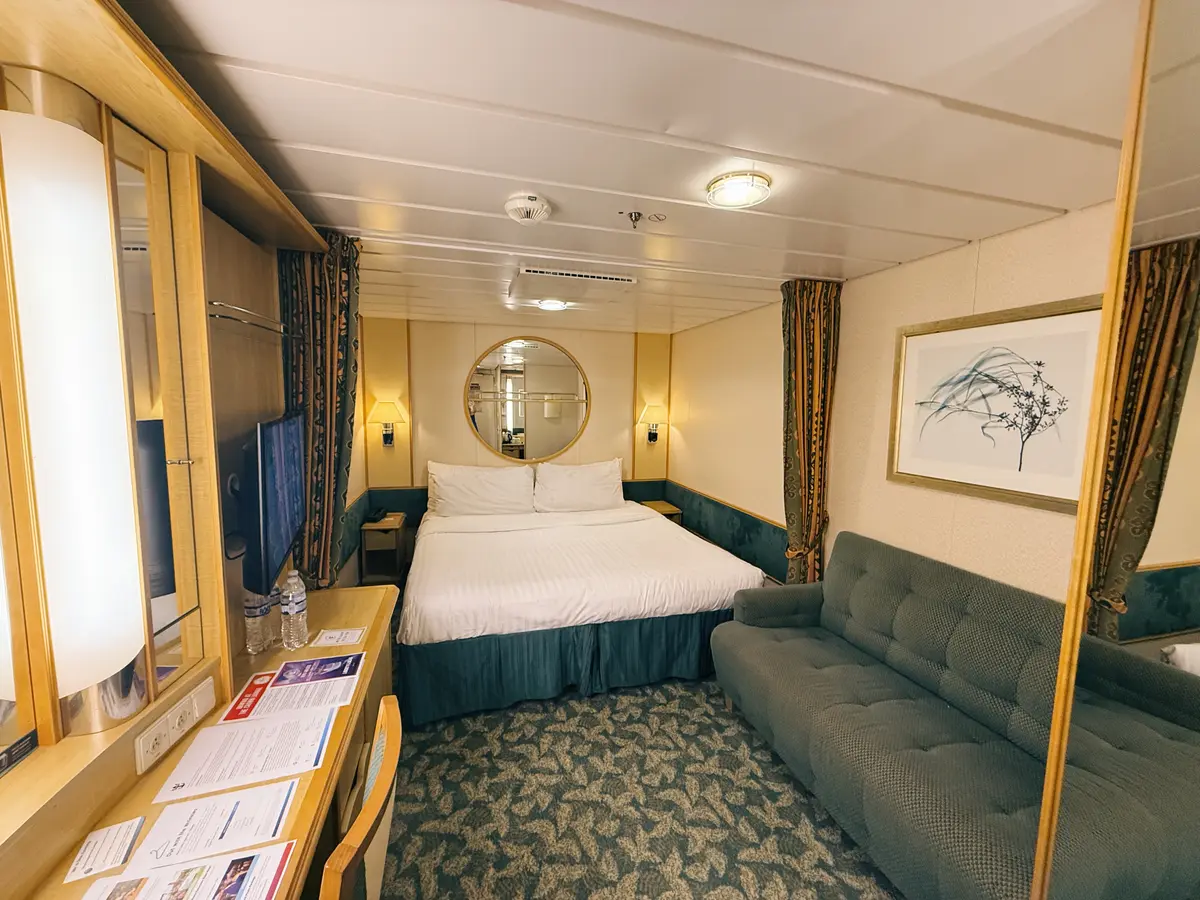
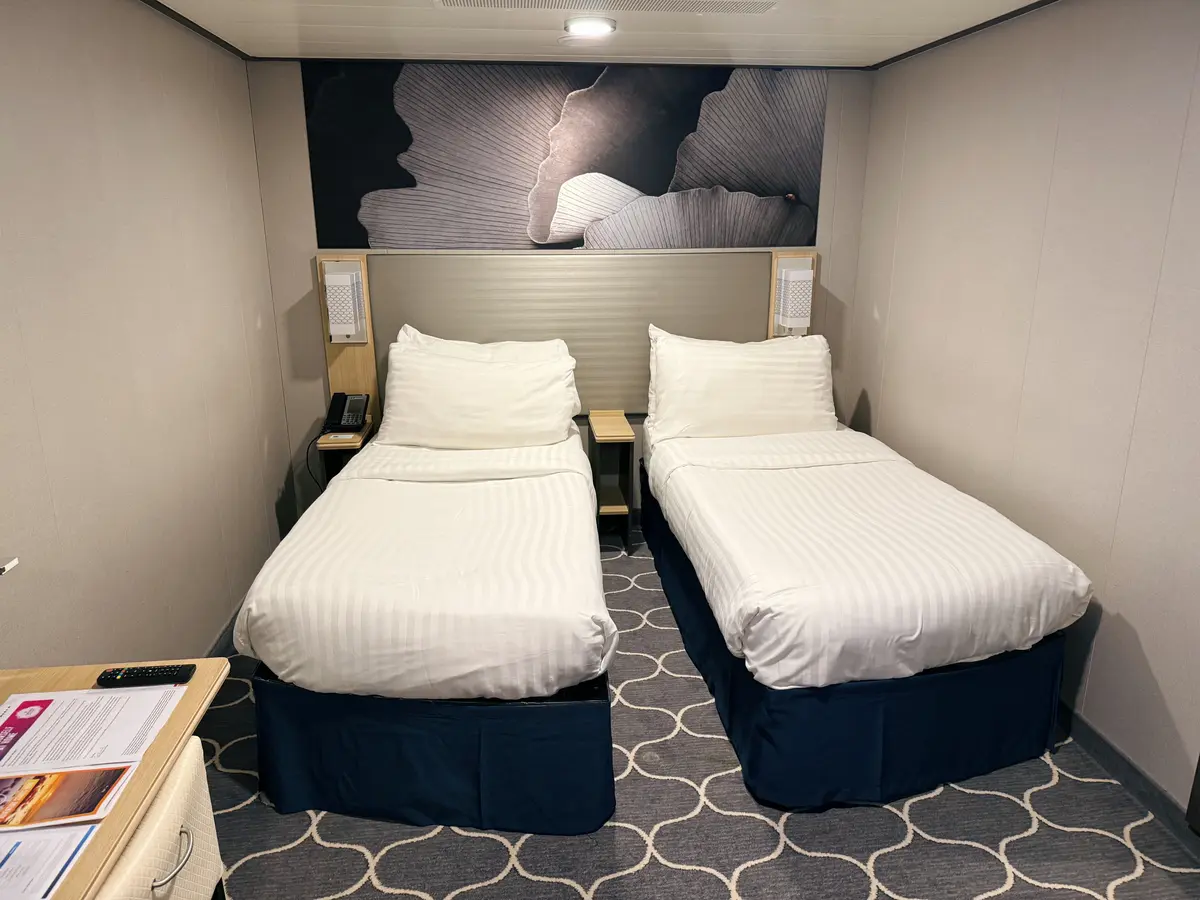
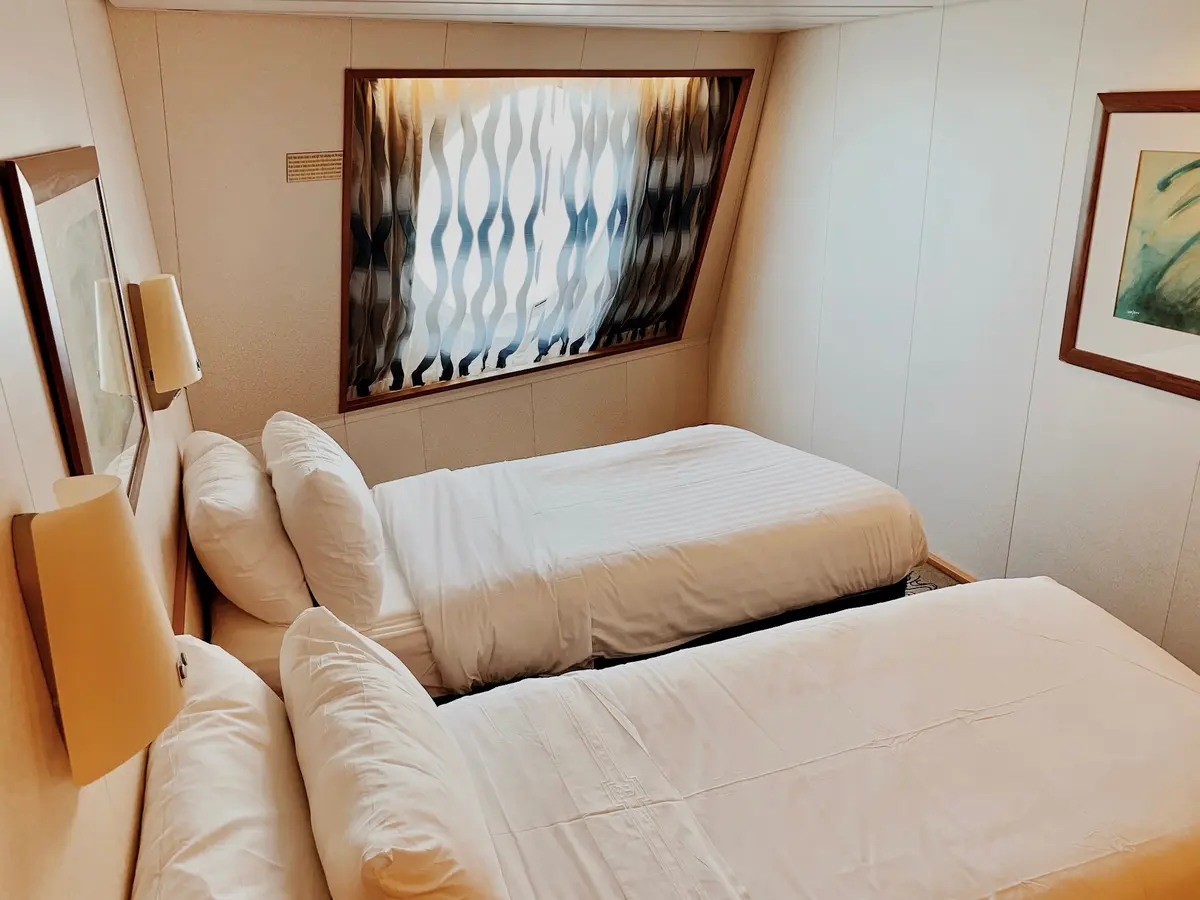
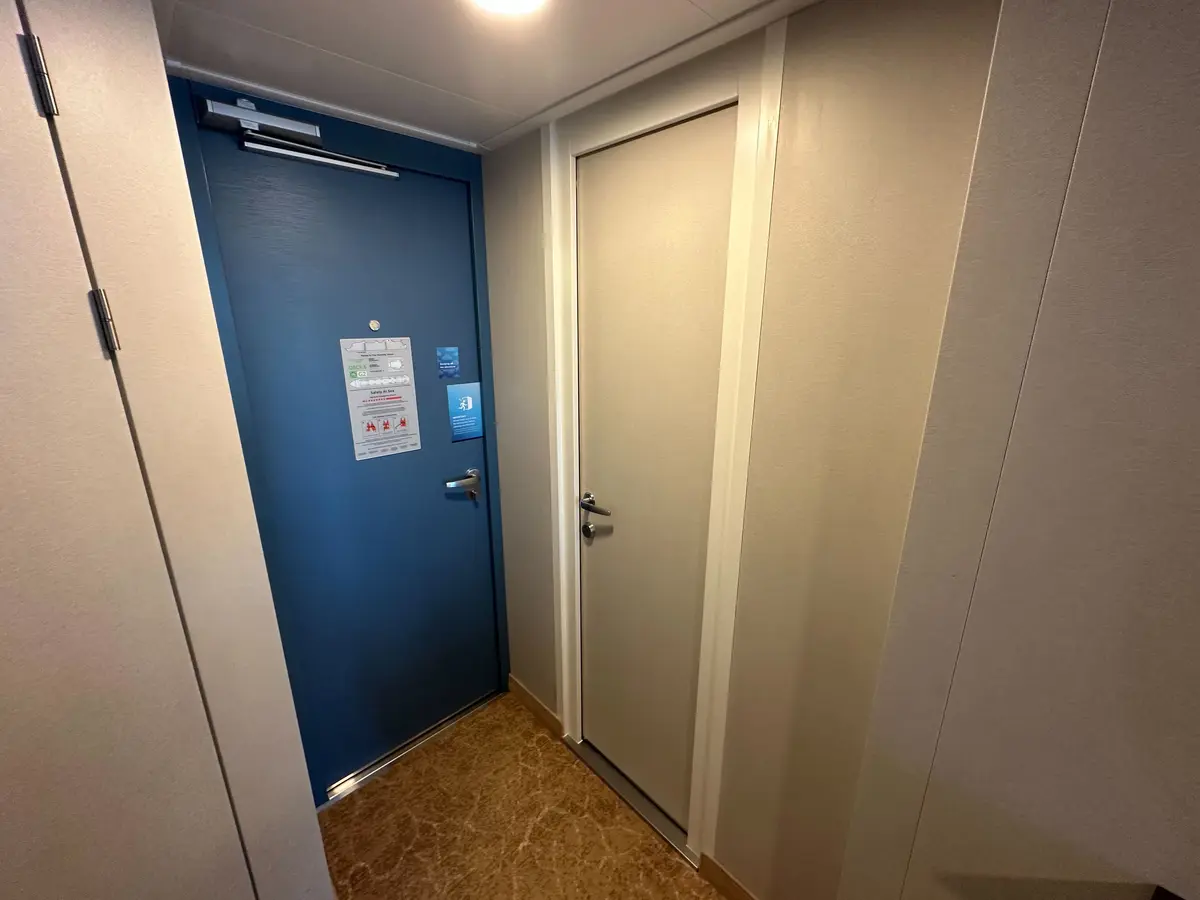
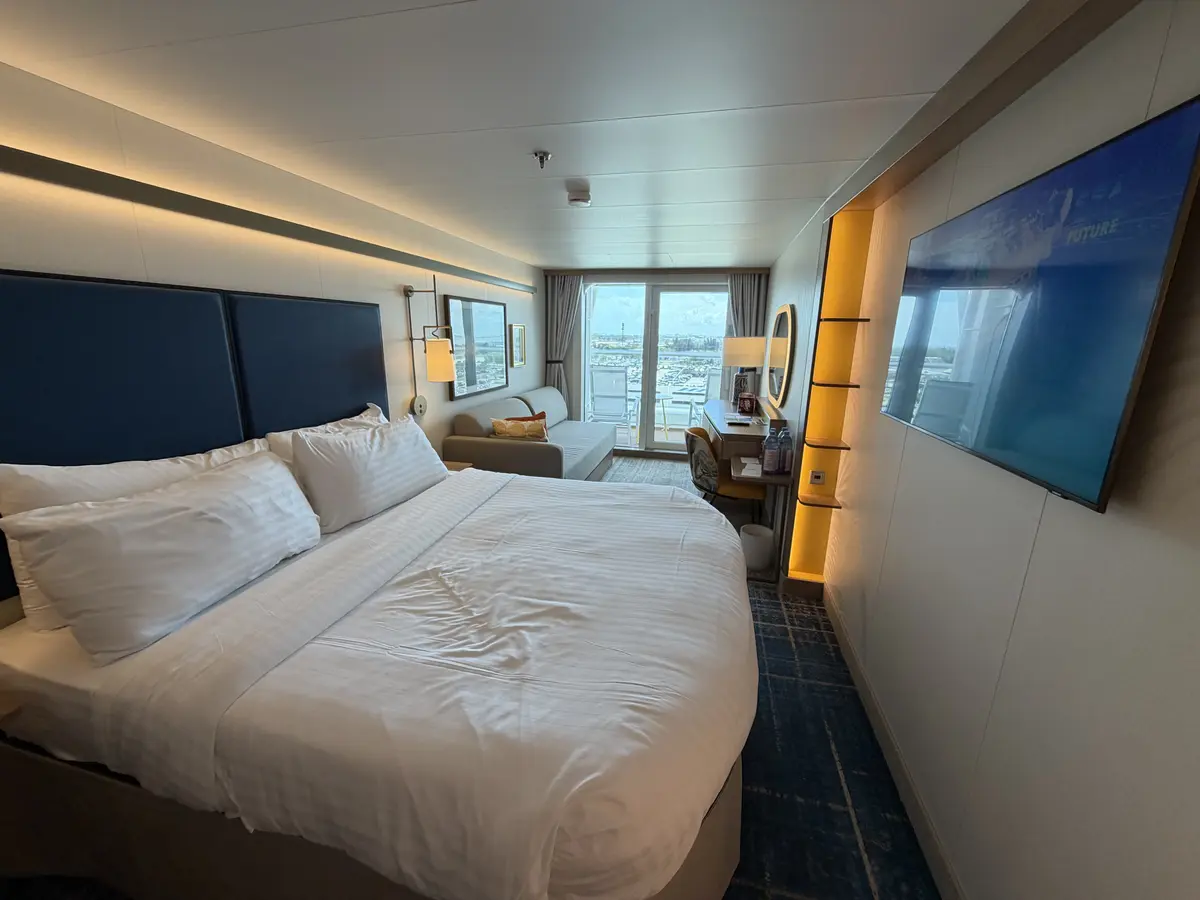
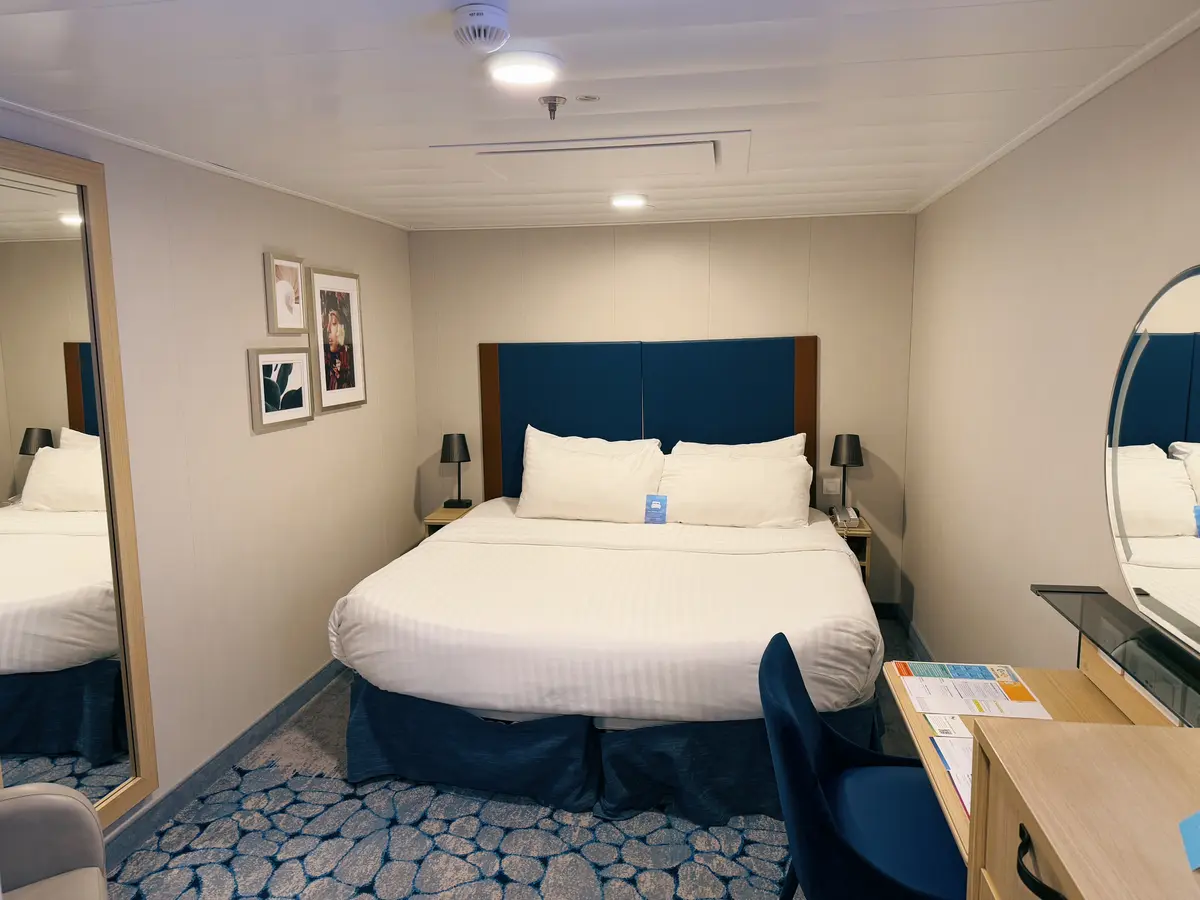
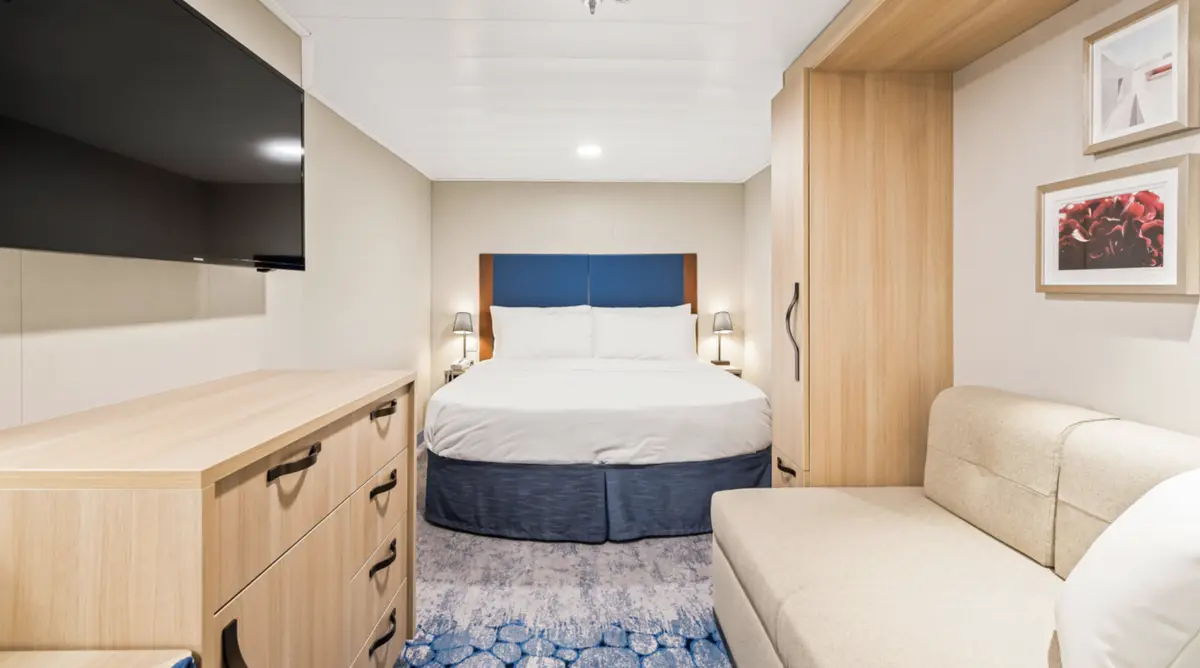
Royal Caribbean requires passengers to vacate their cabins by 8am, and as soon as someone checks out of their stateroom, there's a crew member there to start cleaning it.
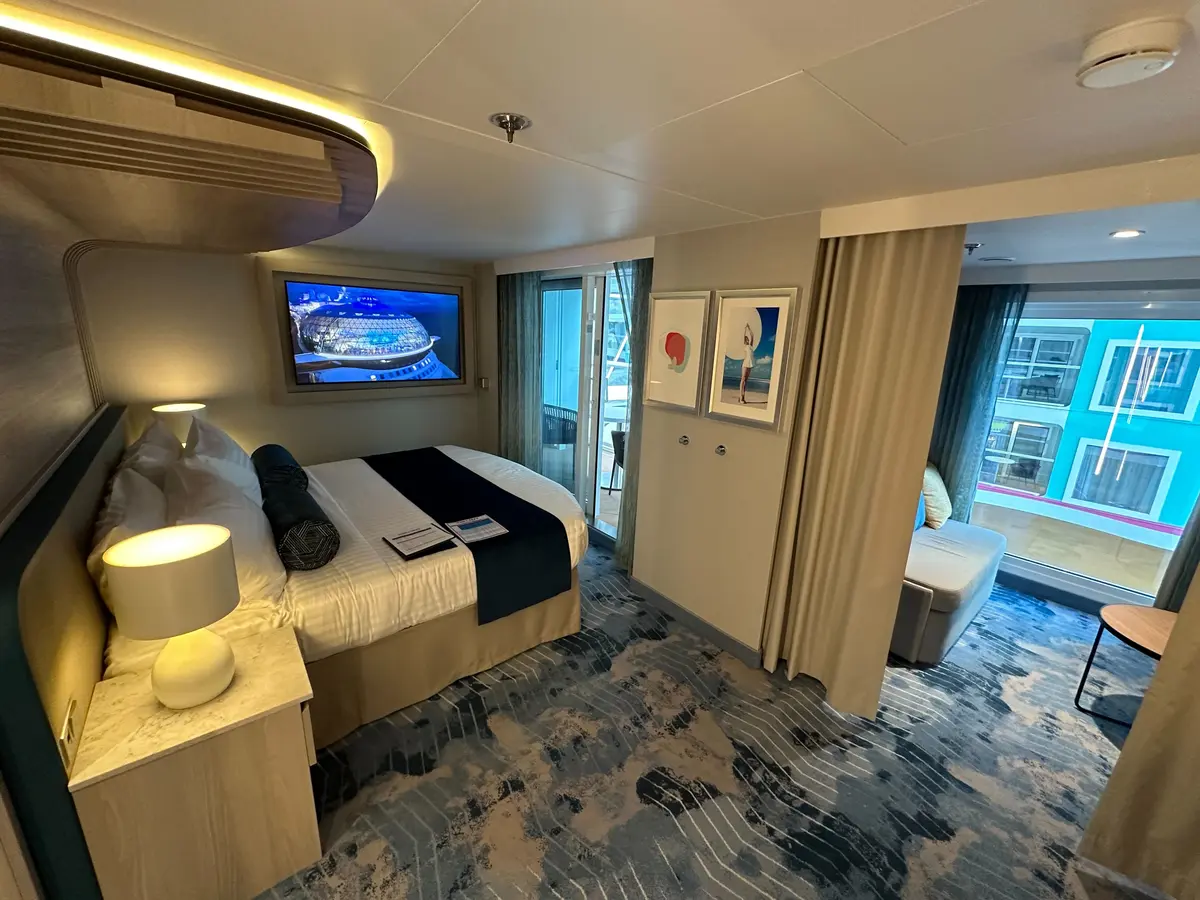
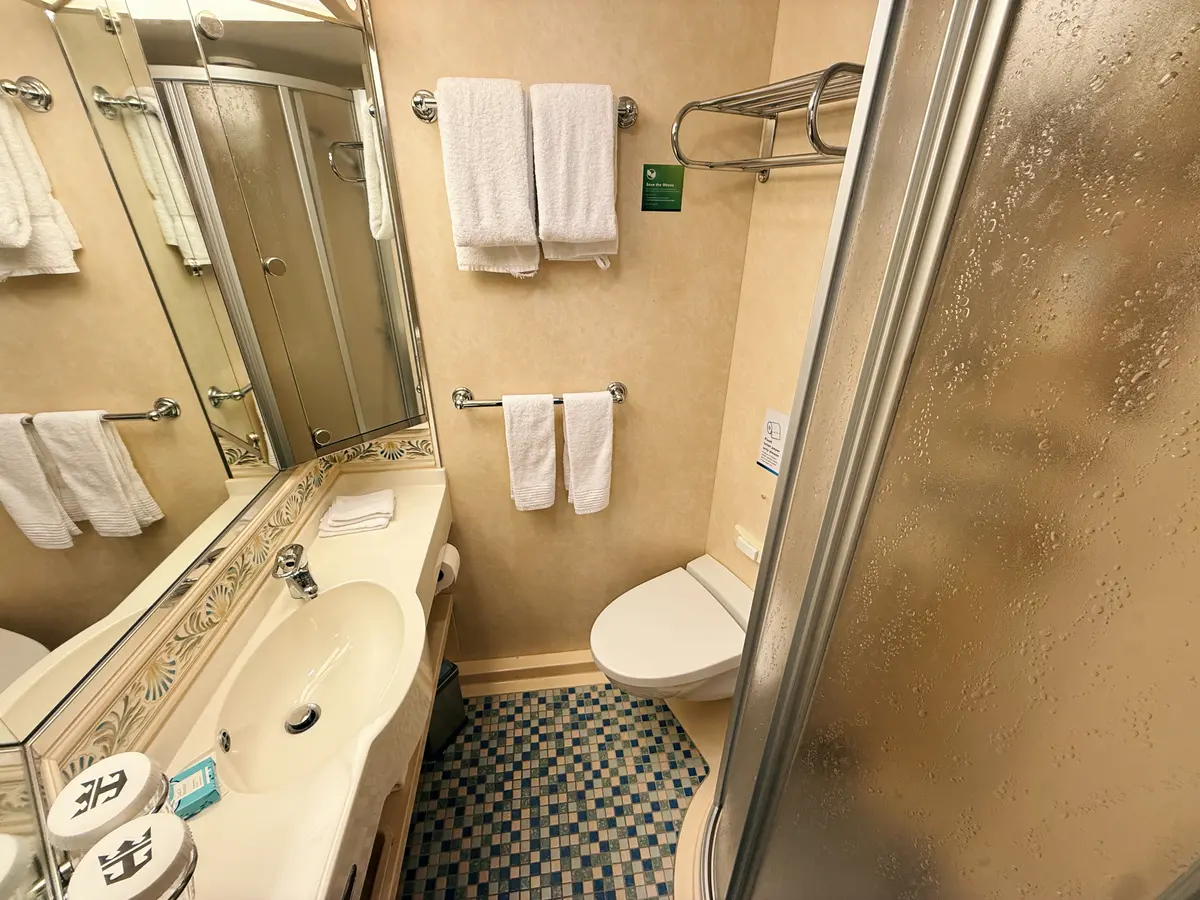
Sheets and towels are removed and replaced with clean ones; Carpets are vacuumed; Trash removed; And everything in the room is re-arranged back to its original configuration.
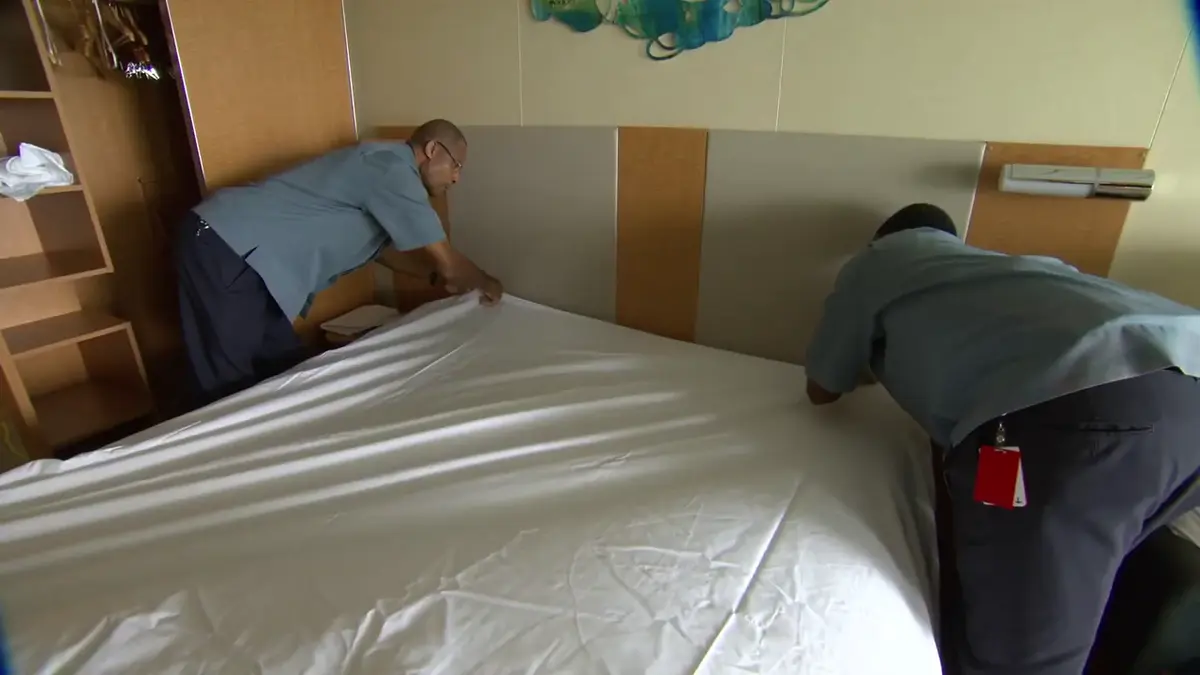
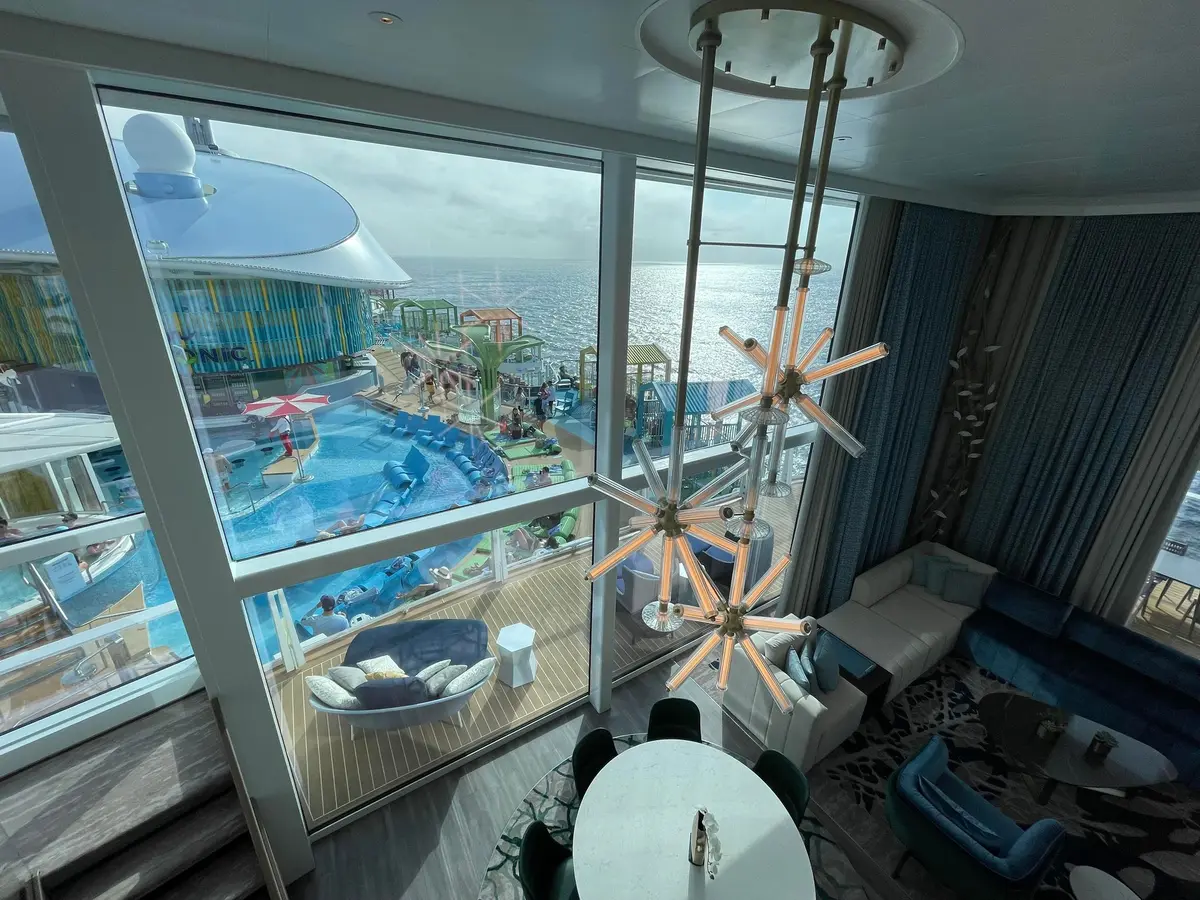
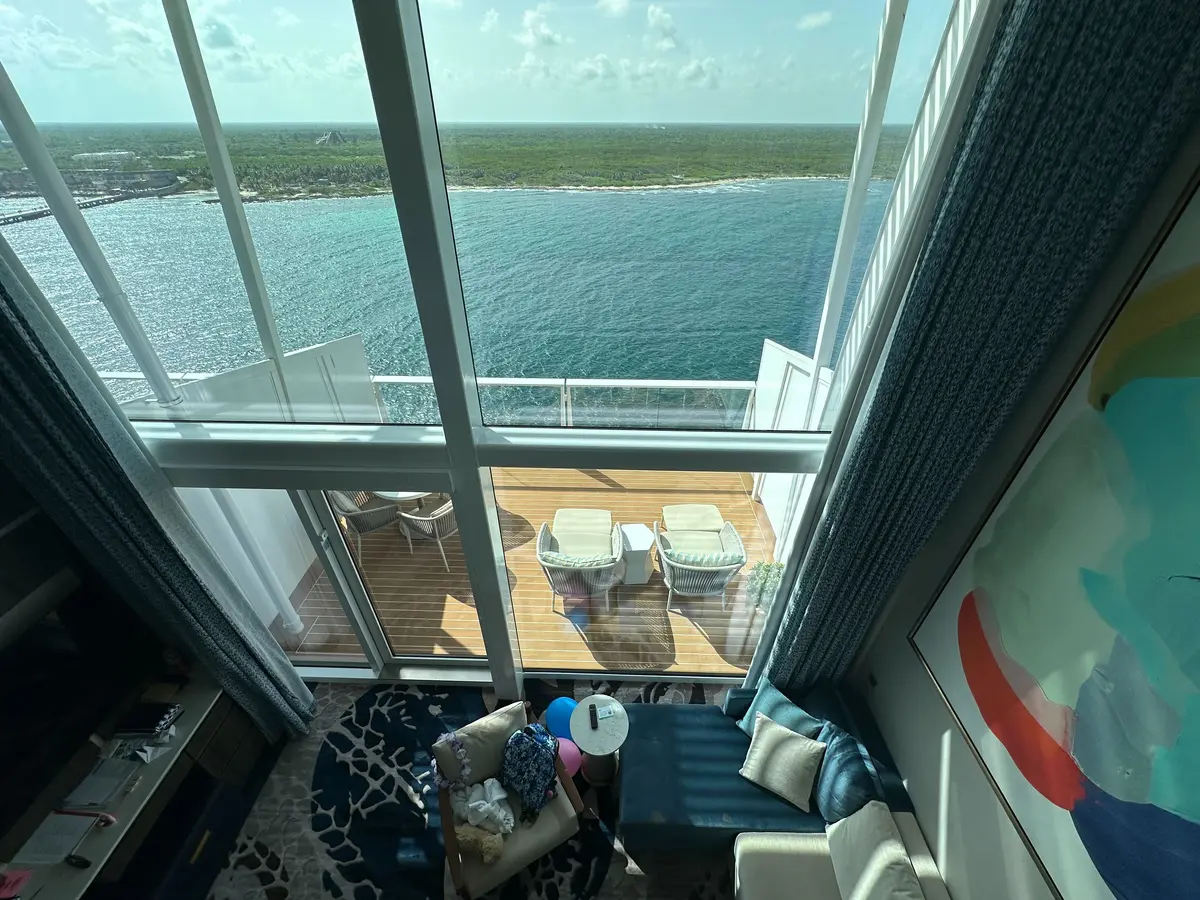
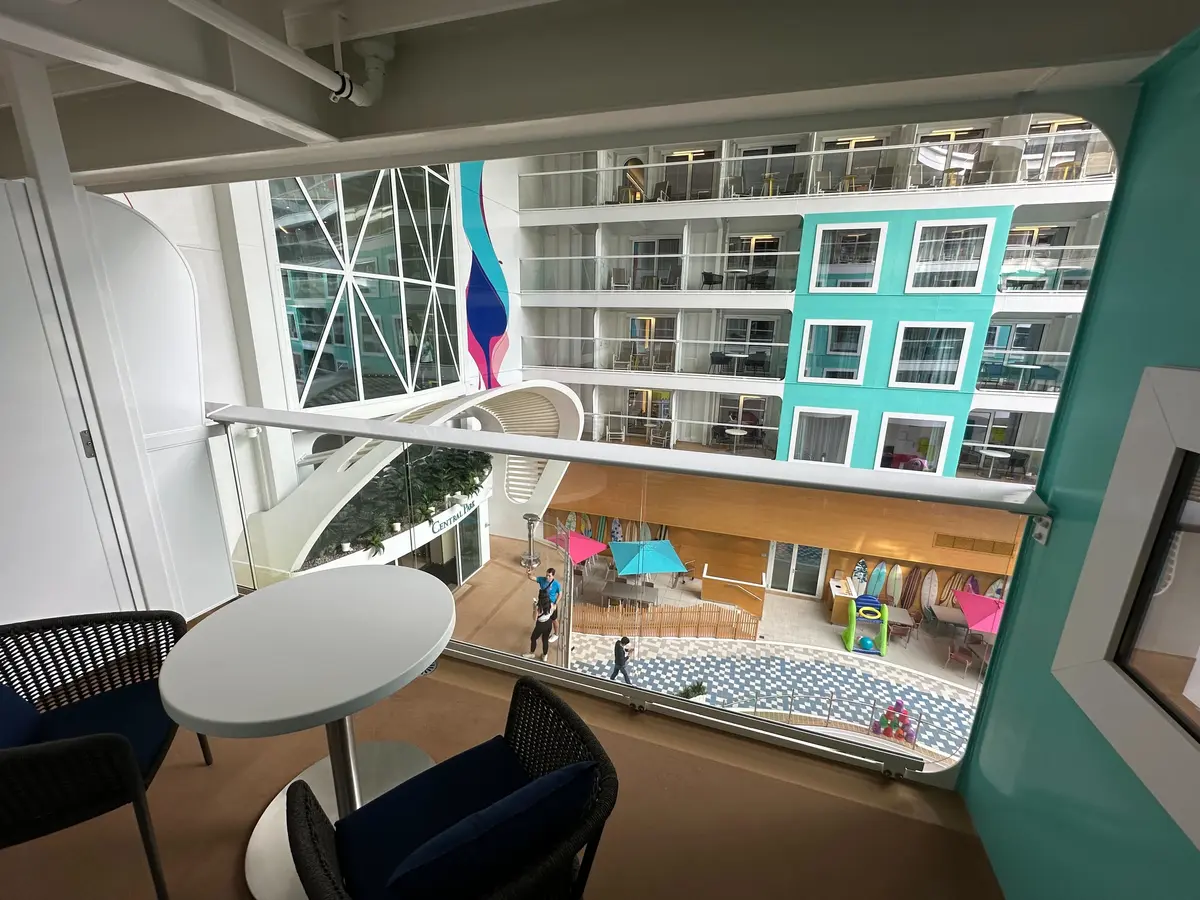
There are a team of crew members that will work all morning until the early afternoon to prep guest rooms. A ship like Star of the Seas has 2,805 staterooms and that requires groups of crew members to move room by room to get them all ready.
With all guests out of their cabins by 8am, that leaves them usually just five hours to have them all cleaned and prepped by 1pm.
Meanwhile, new supplies are brought onboard
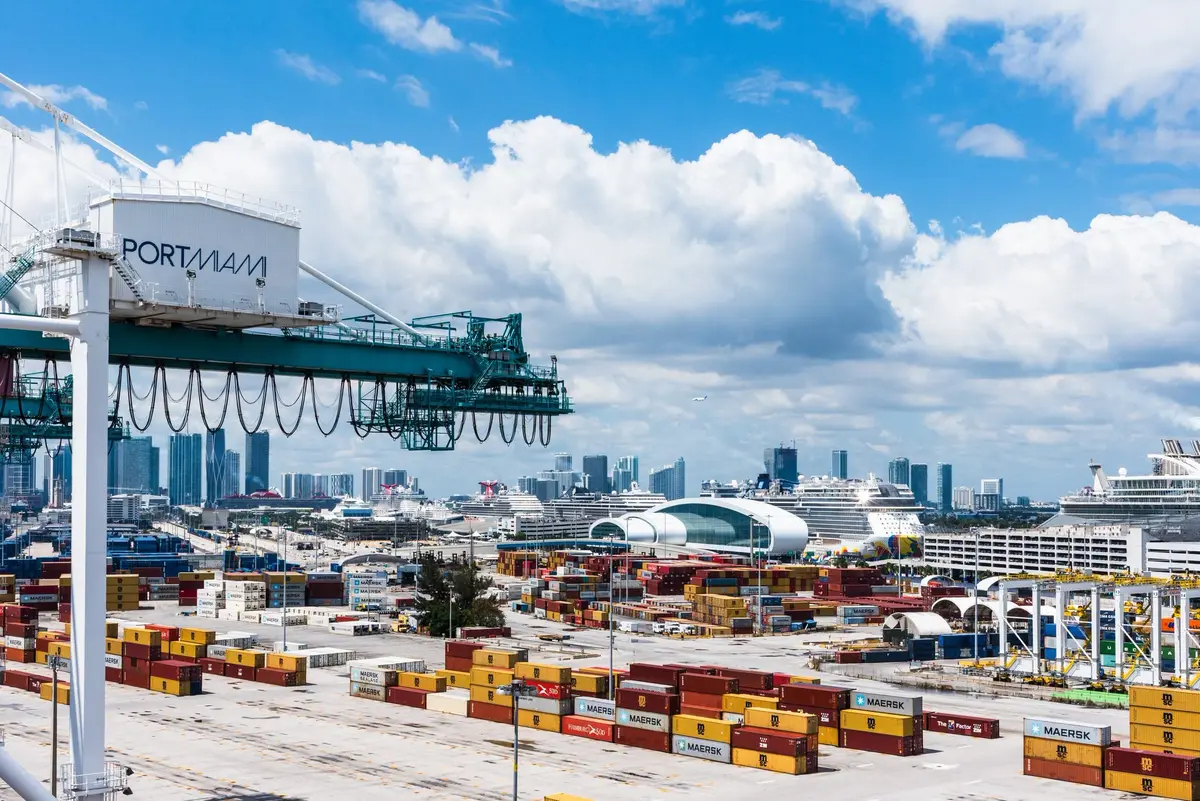
After all the waste has been removed from the ship, new supplies are brought onboard.
Royal Caribbean works with its distributors to have more than enough provisions for the next voyage.
Frozen items, such as prime rib or fish, are brough every two or three weeks. More than 10,000 rolls of toilet tissue, 1,000 new light bulbs, almost 2,000 pounds of coffee are typically brought onboard.
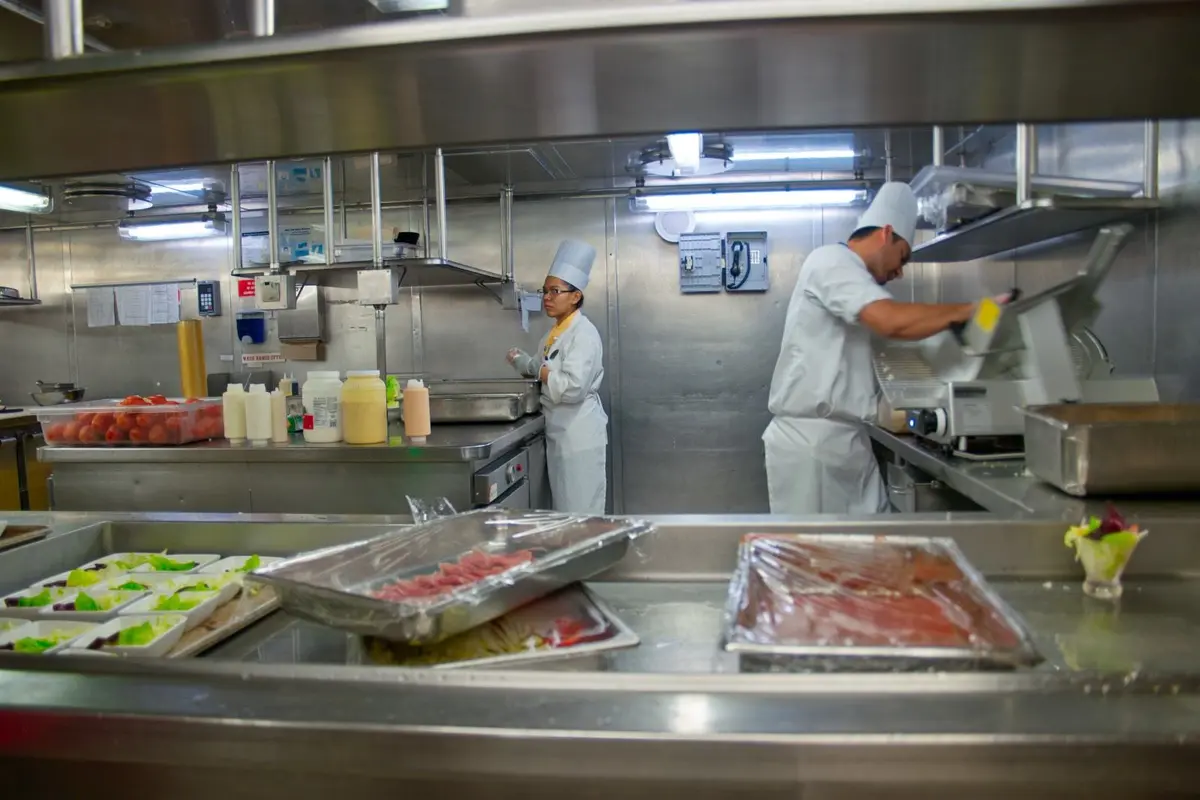
How much of everything they'll need depends on the length of the voyage, the demographics of who's sailing, and the exact itinerary and where they are visiting. Royal Caribbean usually overstocks what it needs to prevent running out of something, or if a sailing needs to be extended because of bad weather.
In fact, Royal Caribbean uses Artificial Intelligence to predict and prevent food waste. Their system analyzes consumption patterns and operational data to ensure it has enough of everything, without oversupplying.
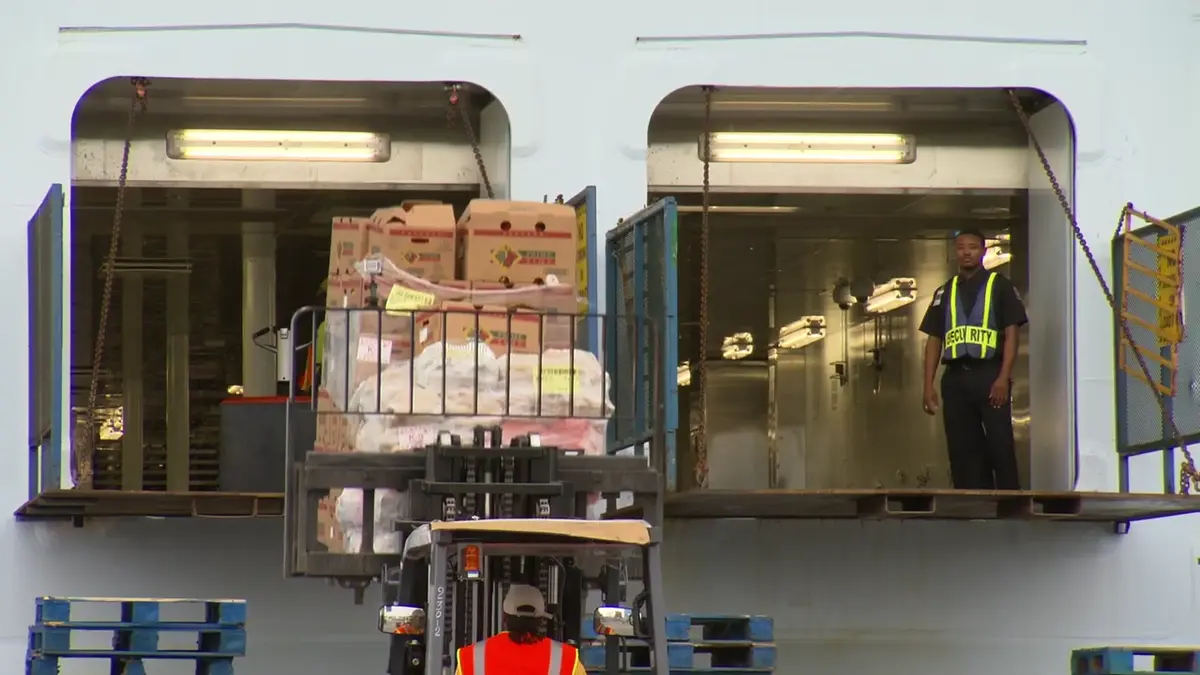
The cruise line has said for its Oasis Class ships, about 600,000 pounds of food and beverages get loaded on the ship.
Trucks will bring 500 pallets of new inventory to the terminal to be loaded onboard. Forklifts move it from the pier to the ship, at which point crew members begin stocking it all.
New passengers begin boarding the ship, along with loading their bags
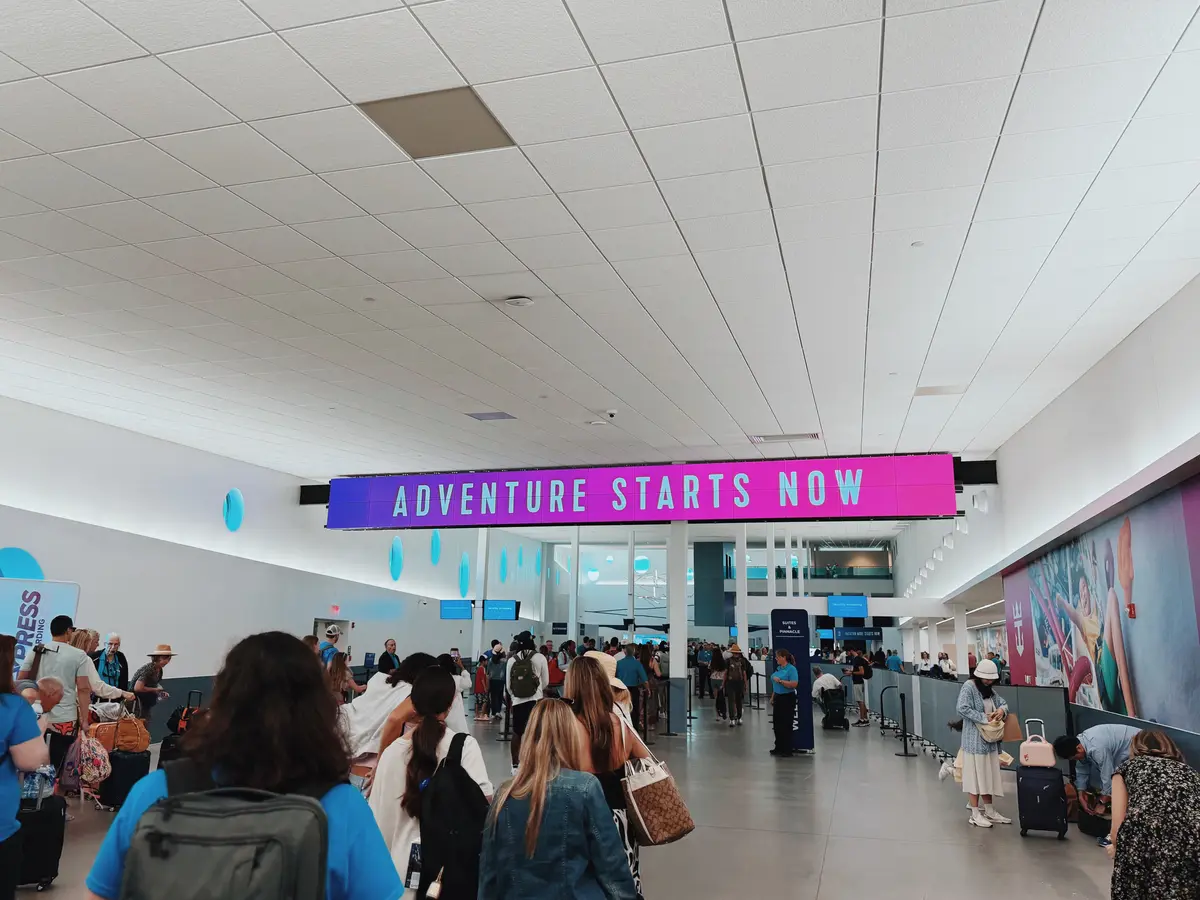
Once all the passengers from the previous sailing have disembarked, it's time to welcome the next sailings' guests.
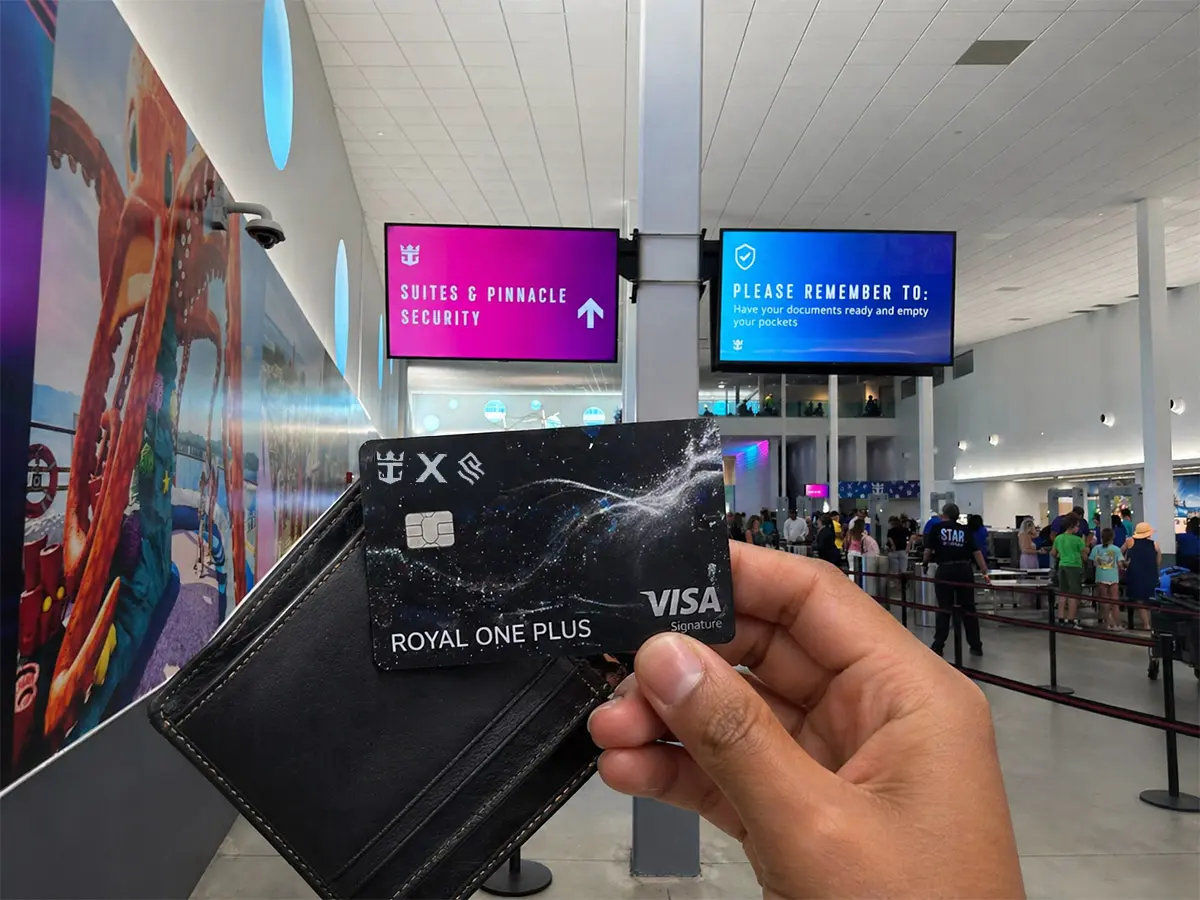
Passengers drop off most of their luggage with porters that work at the cruise terminal. Their job is to take the bags and load them onto the ship.
Luggage is tagged by guests to indicate which cabin and deck it needs to go to. Once on the ship, security will scan each piece of luggage to ensure there are no prohibited items.
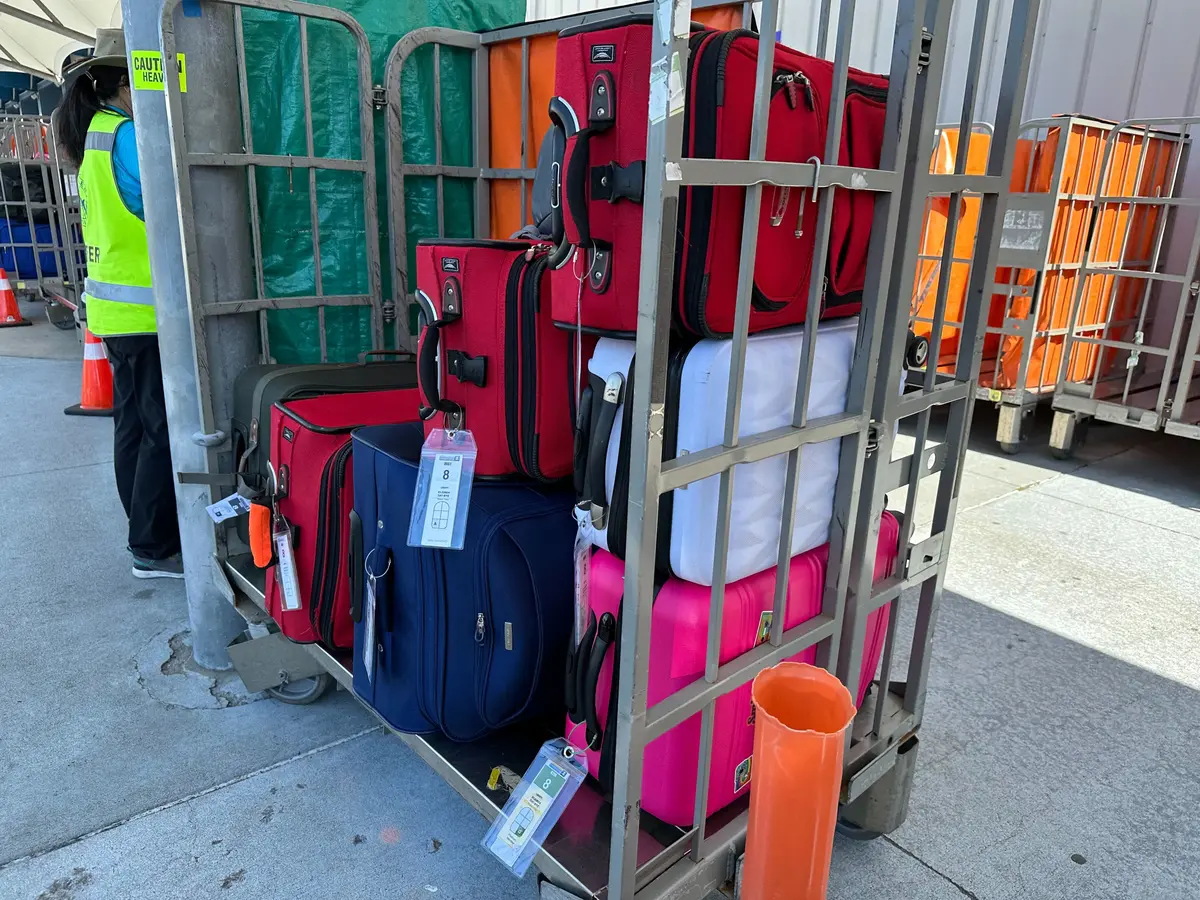
Crew members then begin delivering suitcases to each cabin. It's a process of staging groups of bags by deck, and then moving them to the proper room.
Meanwhile Royal Caribbean starts the boarding process by groups. I think Royal Caribbean has the best and most efficient boarding process of any cruise line because of their adept use of technology to expedite it all.
The boarding window is open until about 3pm for most cruises.
Every passenger must complete the safety drill before the ship can sail
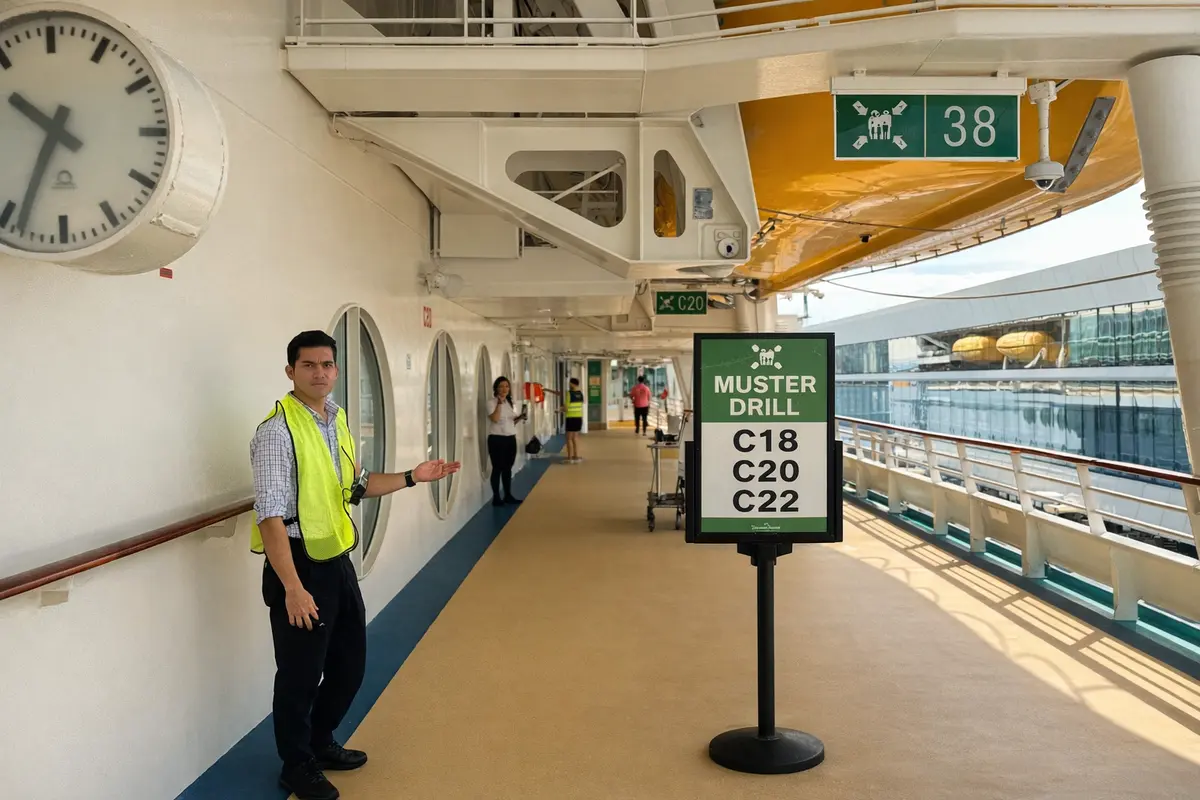
There's one thing every passenger must do on the ship before the vessel is able to depart.
Guests must complete the safety drill so they know what to do and where to go in the case of an emergency.
Royal Caribbean employs a digital muster drill, where guests can use their smart device to watch a safety video and know what the emergency signal sounds like.
They then must go to their assigned muster station to confirm they understand what would be expected of them.
A cruise ship can depart once everyone and everything is onboard

In about 8 hours or so, a cruise ship should be ready to drop its lines and make its way out to sea.
The entire process is very similar to how airplanes are unloaded and loaded and then get authorization to begin a new trip.
Since cruise ships have many more passengers, supplies, and provisions, it's a more complex process.
In the space of a day, the biggest cruise ships in the world will handle over 10,000 people in total as one sailing ends and another begins.
Nearly every crew member and officer is involved in making it all happen. It's a massive effort to get it right, while largely unseen by vacationers who are there for a fun trip.